



Visiting the Alsace-Moselle Memorial in Schirmeck: my review and practical info
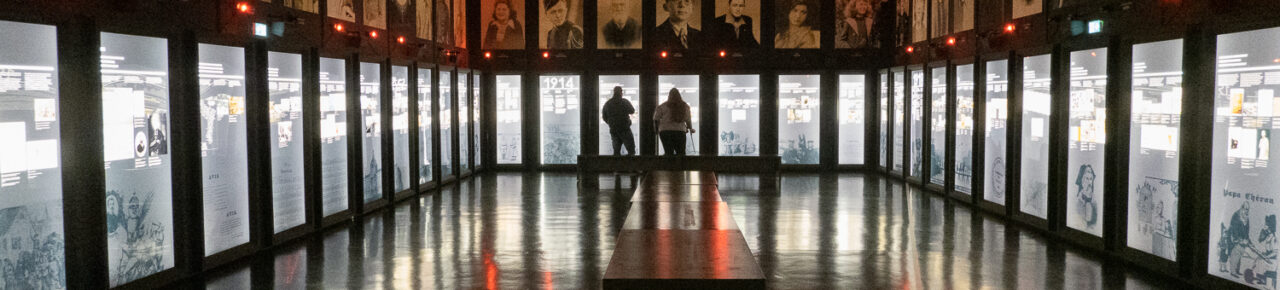
Did you know that people in Alsace and Moselle changed nationality four times between 1870 and 1945? The Alsace-Moselle Memorial, in Schirmeck in the Bruche Valley, retraces this unique story from 1870 through to European integration. Put like that, it might sound a bit dry. But the museum is really well done and genuinely interesting. It’s a place I recommend during your trip to Alsace.

Summary
- My review of the Alsace-Moselle Memorial
- What to see at the Alsace-Moselle Memorial: a route from 1870 to today
- The Europe space at the Alsace-Moselle Memorial: the last room on the route
- The Wall of Names in Schirmeck: what’s new in 2026
- Visiting the Alsace-Moselle Memorial and the Struthof in the same day
- Key takeaways about the Alsace-Moselle Memorial
- Frequently asked questions about the Alsace-Moselle Memorial
The essentials at a glance
- 📍 Location: Allée du Souvenir français, 67130 Schirmeck (Bruche Valley)
- ⏱️ Recommended time: 1h30 to 2h
- 🕘 Opening hours: daily from 9:30 AM to 6 PM, last entry to the visitor route at 5 PM
- 👥 Who it’s for: adults, teens, families with children, visitors with reduced mobility
- 💶 Budget: €€ (full price €13, €9 low-carbon rate, free with the Pass Alsace)
- 🌧️ Bad-weather plan: indoor museum
My review of the Alsace-Moselle Memorial
I liked
- Very interesting light on the history of Alsace and Moselle
- Well-designed museography (films, audio tracks, staging) that brings the museum to life
- A visitor route that looks to the future, with a space dedicated to Europe
- Free with the Pass Alsace
I liked less
- Room dedicated to Europe rather confused
What to see at the Alsace-Moselle Memorial: a route from 1870 to today
Alsace-Moselle, not Alsace-Lorraine: why?
People in Alsace and Moselle changed nationality 4 times between 1870 and 1945. Understanding this past sheds a lot of light on Alsatian culture and what makes it unique. Why Alsace-Moselle and not Alsace-Lorraine? Because on the Lorraine side, only Moselle shared Alsace’s history. The Memorial is a must-see, even if you’re not a huge history buff.
A lively visitor route: films, audio tracks and staging
The museum is designed in a really engaging way: explanatory panels, photos, films, audio tracks, lighting, and room staging. You’re truly immersed in the story, and the panels in each room help you learn a lot.


How much time should you allow for the visit?
Plan to spend 1h30 to 2h, there’s a lot to see. Last entry to the visitor route is at 5 PM and the museum closes at 6 PM. To keep your full two hours, arrive by 4 PM at the latest.
Visiting the Alsace-Moselle Memorial with kids
The Memorial presents its route as accessible, educational and suitable for children, with no violent images or scenes. Each child receives a free Passeport de Jean (Han’s Reisepass), a booklet that follows a 9-year-old boy living in Alsace-Moselle during the Second World War. The Memorial’s free app (Android and iPhone) also enriches the visit.
During school holidays in zone B, a guided tour for children accompanied by their parents takes place every Wednesday at 11 AM. It’s free, no booking required, lasts about 1h45 and is only in French (check the schedule on the Memorial’s website). Service-wise, the Memorial has a high chair, changing table, microwave and children’s area.
A tip from a local: during Zone B school holidays, plan your visit for a Wednesday to catch the 11 AM guided tour.
Also on the blog
The Europe space at the Alsace-Moselle Memorial: the last room on the route
In addition to teaching about past history, the Memorial looks to the future by highlighting the importance of Europeans uniting in their diversity to ensure peace and freedom. The final part of the route is therefore dedicated to European integration. A very good idea in my opinion, although I found this space a bit confusing.


The Wall of Names in Schirmeck: what’s new in 2026
I haven’t had the chance to visit it yet, so here’s what the Memorial says. The Wall of Names is a memorial site opened in 2026 by the Grand Est Region, just below the Alsace-Moselle Memorial. It is dedicated to people from Alsace and Moselle who were victims of Nazi persecution and World War II: nearly 44,000 women and men. It includes those forcibly conscripted, fighters in French uniform, civilian victims, resistance members, as well as people persecuted by the Vichy regime or by the Nazis: Jews, Jehovah’s Witnesses, nomads and Roma, homosexuals, and psychiatric patients.
The monument is entirely digital and designed to grow as historical research progresses and descendants contribute. The names can also be searched in an online database. The building, with its clean-lined architecture, was designed by Benoît Zeimett. For opening hours and access conditions, check the Memorial’s website.
A tip from a local: the Wall of Names also offers a podcast, « Entre nuit et lumière », an eight-episode series devoted to individual lives (a forcibly conscripted man, a female resistance fighter, a family affected by the Shoah…), to listen to before or after your visit.
Visiting the Alsace-Moselle Memorial and the Struthof in the same day
The Memorial pairs perfectly with a visit to the former Struthof concentration camp, about ten kilometres away—around 15 minutes by car. You’ll get a fuller picture of what happened in Alsace during World War II.
A tip from a local: keep your Memorial ticket—it gives you a discounted rate at the Struthof, valid for one year.
In a different vein, you can also visit MM Park in La Wantzenau, with its military vehicles and children’s play area.
Key takeaways about the Alsace-Moselle Memorial
- 🏛️ A lively museum, from 1870 to European integration
- ⏱️ 1h30 to 2h visit, child-friendly route
- 🎟️ Free with the Pass Alsace, €9 low-carbon rate
- 🚆 Easy to reach by train (Schirmeck-la-Broque station)
- 💬 My one downside: the Europe space, a bit confusing
To keep exploring, visit the former Struthof camp, the Linge Memorial Museum, or follow the 6 August 1870 battle trail in Woerth.
Practical information
Rates
- Full price: €13
- Reduced rate: €10 (including under-18s, students, jobseekers; full list on the Memorial website)
- Family pass: €32 (1 or 2 adults with up to 4 children under 18)
- Low-carbon rate: €9 per adult and €28 for a family, only on presentation at reception of a train ticket dated the same day, or if you arrived by bike
- Free for under-8s, and for holders of the Pass Alsace or the Museum Pass
- If you also visit the former Natzweiler-Struthof concentration camp, you get a reduced-price ticket for one year on presentation of your Memorial entry ticket. Conversely, a Struthof ticket less than a year old brings Memorial admission down to €10.
Individual prices updated in 2026—find current prices on the Memorial website.
Schedules
The Memorial is open daily from 9:30 AM to 6 PM, with last entry to the visitor route at 5 PM. It is closed on January 1, part of January, May 1, and December 24, 25 and 31. Find the Alsace-Moselle Memorial opening hours on its website.
Guided tours
Guided tours are available for groups of 15 or more. During some school holidays, discovery guided tours are also offered to individual visitors at no extra charge (check the schedule on the Memorial’s website).
Accessibility
The Memorial is accessible to visitors with reduced mobility:
- 4 accessible parking spaces at the car park by the Memorial, 3 in the lower car park (10 to 15 minutes on foot)
- 2 lifts
- 3 wheelchairs available to borrow
- Accessible toilets
- Guide dogs and assistance dogs allowed
Access
By car
The address is: Alsace-Moselle Memorial, Allée du Souvenir français, 67130 Schirmeck. Allow:
- 48 km from Strasbourg (about 40 minutes)
- 80 km from Colmar (about 1 hour)
- 120 km from Mulhouse (about 1h20)
By public transport
Schirmeck-la-Broque station is served by the TER (about 40 minutes from Strasbourg), and the Memorial is about a 15-minute walk from the station. The station ticket office is closed at weekends, but you can buy your ticket from the TER machine or on your phone. You can plan your journey on Fluo.
By bike
The Vélo-Bruche runs through the valley from Urmatt to Saales, mostly on a dedicated path, away from cars. For a full car-free weekend in the valley, check out my car-free weekend in the Bruche Valley.
A tip from a local: come by train or by bike—your same-day train ticket or arriving by bike gets you the low-carbon rate.
Frequently asked questions about the Alsace-Moselle Memorial
How long does it take to visit the Alsace-Moselle Memorial?
Allow 1h30 to 2h to visit the permanent exhibition, as there’s a lot to see. To keep your full two hours before the 6 PM closing time, arrive by around 4 PM at the latest.
How much is admission to the Alsace-Moselle Memorial?
Full price is €13 and the reduced rate is €10. The low-carbon rate is €9 per adult (€28 for a family) on presentation of a same-day train ticket or if you arrived by bike. Admission is free for under-8s and for holders of the Pass Alsace or the Museum Pass.
Can you get to the Alsace-Moselle Memorial by train?
Yes, Schirmeck-la-Broque station is served by the TER from Strasbourg (about 40 minutes), and the Memorial is about a 15-minute walk from the station.
Is the Alsace-Moselle Memorial suitable for children?
Yes, the Memorial presents its route as suitable for children and shows no violent images or scenes. Each child receives Jean’s Passport for free, an age-appropriate booklet, and a family guided tour is offered on Wednesdays at 11 AM during Zone B school holidays. The Memorial does not specify a minimum age.
Can you combine the Alsace-Moselle Memorial and the Struthof?
Yes, the two sites complement each other very well. Your Memorial ticket gives you a discounted rate at the Struthof for one year, and the camp is about 15 minutes away by car.