



Visit Alsace – My TOP 35 things to do, see and taste
What to do and what to visit in Alsace? I've put together a list of places to visit and things to experience when visiting Alsace. These are my favorite activities or sites, the ones I immediately think of when people ask me for my ideas for visiting Alsace. Follow the guide, and off you go!

The essentials at a glance
- 🍇 Local must-sees: A road trip or bike ride along the legendary Wine Route, a wine tasting at an independent winery, and a cozy evening at an authentic winstub.
- 🏰 A unique historical heritage: Picture-perfect villages (Ribeauvillé, Eguisheim, Riquewihr, Kaysersberg…), the grandeur of Strasbourg and Colmar, not to mention the imposing fortresses such as Haut-Koenigsbourg.
- 🌲 A breath of fresh air in the Vosges: Hikes along the Route des Crêtes, mystical panoramic views at Mont Sainte-Odile, and gourmet breaks at farm-inns.
- ✨ Traditions and Lifestyle: Cultural immersion atthe Alsace Ecomuseum, the enchanting magic of the Christmas markets, and the unique craftsmanship of our potters and glassblowers.
Cities, villages, and hidden gems to explore
1. Stroll through the most beautiful villages in Alsace
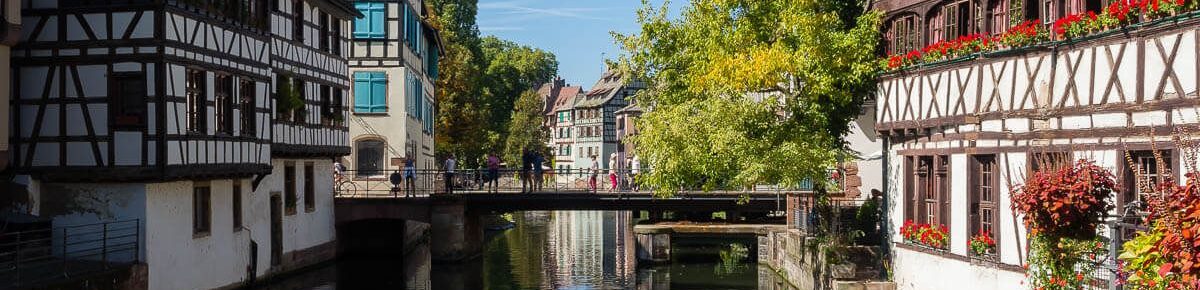
You will see it quickly if you come to visit Alsace, the region is very flowery! When spring comes, geraniums and other plants overflow from the window boxes and majestically adorn the facades of the magnificent half-timbered houses. Strolling through the narrow streets of small Alsatian towns like Obernai or villages like Eguisheim, Riquewihr, Ribeauvillé and Kaysersberg (to name but a few) is a delight. But above all, don’t hesitate to go and see other villages than these: they are the most touristic, they are very beautiful but there are a lot of very beautiful villages, and you will also be more quiet…


2. Visit Strasbourg, the vibrant European capital
Strasbourg is a dynamic city that is very pleasant to visit. Of course, the Petite France and the Cathedral Notre-Dame of Strasbourg are not to be missed, but the city has much more to offer. You can walk through its charming streets and enjoy its lively atmosphere: stores, bars, restaurants… The people of Strasbourg like to go out and the city does not lack animations! Visit my dedicated articles to find out more.


3. Fall in love with Colmar and its “Little Venice”
Colmar is Alsace’s little postcard: you can hardly get more charming! It’s a great place to take a stroll (especially for a romantic weekend!) and a must for a little boat trip in Little Venice. Its only small flaw: it is very quiet, do not expect crazy parties! 😉


4. Take the plunge in Mulhouse: a creative and industrial surprise
Mulhouse is somewhat of the unloved city of Alsace. That’s a great shame, in my opinion. It may not have the charm of Colmar, but it has plenty of other attractions. It’s an extremely dynamic and creative city, with a rich industrial history, and one that has successfully reinvented itself. For example, don’t miss a visit to one of Mulhouse’s many museums, such as the National Automobile Museum, the Cité du Train, or the Museum of Textile Printing.


5. Let Northern Alsace—a well-preserved and authentic region—surprise you
The north of Alsace is often shunned by tourists because it is less known. However, it is full of riches! Take a stroll through the Vosges du Nord Regional Nature Park, stroll through beautiful Wissembourg, visit the villages ofHunspach and Seebach, see the amazing troglodyte houses of Graufthal, visit Lichtenberg castle, wander through the immense Haguenau forest and visit the potters and glassworks I’ve mentioned below.


6. Escaping the Crowds: My Secret Spots for Getting Off the Beaten Path
Tourists in Alsace are generally concentrated in the same area, between Colmar and Strasbourg. If you like to go off the beaten track, I invite you to go and see other parts of Alsace, which are also very nice. These include the north of Alsace, which I’ve just mentioned, but also the pretty hills of the Sundgau (to the south), the delightful town of Sélestat, the Ried, and the northern and southern parts of the Alsace Wine Route (Couronne d’or vineyards, for example).


Alsatian Terroir and Cuisine
7. Explore the legendary Alsace Wine Route (by car or bike!)
The Alsace Wine Route is a must-see in Alsace. The oldest wine road in France winds its way through the vineyards and across the slopes of the Vosges mountains, passing through villages, each more charming than the last, and offering magnificent views.
It’s impossible to get tired of it; personally, I’m still amazed every time I pass through it (even though I’ve traveled it many times!). For an even more enjoyable experience, in my opinion (and a more eco-friendly one), don’t hesitate to explore the Alsace Wine Route by bike!


8. Step inside a winery and share a winemaker’s passion
You can’t visit Alsace without stopping by a winery, tasting some fine Alsatian wine, and—most importantly—taking the time to chat with the winemakers! Winemakers are often passionate people who love their craft and, of course, have a wealth of knowledge. What better way to get a feel for the region’s culture? It would be a shame to miss out on a wonderful encounter over a glass of Crémant, Riesling, Gewürztraminer, or Pinot Noir, wouldn’t it?


9. Sit down for a meal at an authentic Winstub (the traditional local brewery)
Alsatian gastronomy is rich and tasty. Not very light on the other hand, especially since, as you will see, the portions are generous in Alsace, but it would be a shame not to enjoy them at least once during your stay. Sauerkraut or other Alsatian specialties, there is a lot of choice… The important thing is to choose your restaurant carefully so that you can also enjoy the traditional warm atmosphere of a real Alsatian winstub (the local brasserie). Here are some of the best places to go for a treat.


10. Share an authentic Flammekueche (tarte flambée) baked in a wood-fired oven
You’ll see, the tarte flambée is everywhere in Alsace! But beware, they are often pale frozen counterfeits of the real flammekueche. Alsatians will tell you that to avoid being mistaken, you must go to the villages outside the cities. The best place to go is Kochersberg, the birthplace of tarte flambée, where you’ll find plenty of good restaurants to sample it, but you’ll also find good ones elsewhere in Alsace. Here are my good addresses.


11. Enjoy a hearty farmer’s meal at a farm inn in the Vosges
After the effort, the comfort… A good table is never far away in Alsace! 😉 In spring and summer, the farm inns of the Vosges open their doors and welcome hikers (or others).
The marcaire meal is one of the great classics of the farmhouse inn, and includes a winegrower’s pie, followed by roïgabrageldi (sliced potatoes, onions and butter, all slow-cooked in a cast-iron pot) served with smoked pork (collar or chuck, for example) and finally a dessert, traditionally Siesskass (fresh cheese of the day with sugar and kirsch) or homemade tart.


12. Experience the craft beer revival at a small, artisanal microbrewery
We love beer in Alsace and the region has many microbreweries. Some breweries are open to the public, provided you book a visit in advance. Another great opportunity to meet a passionate person who will talk to you about his job!


13. Indulge in the region’s sweet specialties and treats
Kougelhopf, pain d’épices, bredele, tarte au fromage blanc, torche aux marrons…there’s no shortage of sweet treats in Alsace! Don’t hesitate to try these delicious sweet specialties for breakfast, snack or dessert!


Nature, the great outdoors, and mountain peaks
14. Take in the view from the stunning, panoramic Route des Crêtes
The Route des Crêtes is the road on the crests of the Vosges mountains, between Sainte-Marie aux Mines and Cernay. It can be explored on foot, by car or by bike, and is also accessible in summer thanks to the Crêtes shuttle. In any case, it is magnificent and offers beautiful panoramic views of the Vosges peaks! Please note that the Route des Crêtes is totally closed in winter.


15. Soak up the mystical and historical magic of Mont Sainte-Odile
Mont Sainte-Odile is an ancient abbey in the Vosges mountains, high aboveObernai. It’s a magnificent, soothing place, with superb views over the Alsace plain, the Black Forest and the Vosges mountains. An ideal place to recharge your batteries…


16. Put on your sneakers for a hike in the Vosges Mountains
In Alsace, we are lucky to have mountains: the Vosges! Nothing to do with the high pointed peaks of the Alps, but the Vosges are nice mountains with forests that are very pleasant to walk, ride or ride a horse. There’s no shortage of hiking trails, signposted by the Club Vosgien: in the Hautes-Vosges, Vosges du Nord or Alsatian Jura, you’re spoilt for choice when it comes to ideas for walks, and there are often castles to discover along the way!


17. Recharge your batteries amid the wild biodiversity of the Ried Plain
The Ried d’Alsace is a natural region located in the plain of Alsace. It is an area often shunned by visitors because it is less “typical” of the image of Alsace that we often have in mind, with half-timbered houses and vineyards. It is however a corner which also presents a great interest and which I like very much, for its calm and its incredible biodiversity. If you love nature, go for it!


18. Cover lots of ground on Alsace’s superb network of bike paths
Did you know that Alsace is one of the areas in France with the largest network of bicycle paths? It would be a real shame not to take advantage of it, asAlsace by bike is a real treat!


19. Take a dip in the lakes and gravel pits that are open to the public in the summer
Okay, we don’t have the ocean in Alsace… That’s true, but thank goodness we have mountain lakes and developed gravel pits! There’s nothing like taking a dip when the intense summer heat hits the region…I haven’t listed them all (yet!), but here are a few examples of swimming spot round Strasbourg and, in southern Alsace, Lake Kruth.


20. Enjoy skiing and the snow at the Vosges resorts in winter
Let’s be honest, winter isn’t exactly the most cheerful time of year to visit Alsace: it’s gray, foggy, cold, and everything feels pretty gloomy. Everything, that is, except the Vosges! There’s nothing like a little trip to the mountains—which are easily accessible from the lowlands—to lift your spirits! The sun often shines there, and sometimes you can enjoy the joys of the snow: downhill or cross-country skiing, snowshoeing, dog sledding… All you have to do is choose! 😉 Plus, there are plenty of other fun activities to do during this season!


Culture, History, and Arts and Crafts
21. Admire the masterpiece, the Issenheim Altarpiece, at the Unterlinden Museum
The Unterlinden Museum in Colmar is a superb museum acclaimed by art critics around the world. It must be said that it hosts a collection of impressive wealth for such a small city, and that the building is beautiful! An ideal place for art lovers…


22. Explore the medieval castles (including the majestic Haut-Koenigsbourg)
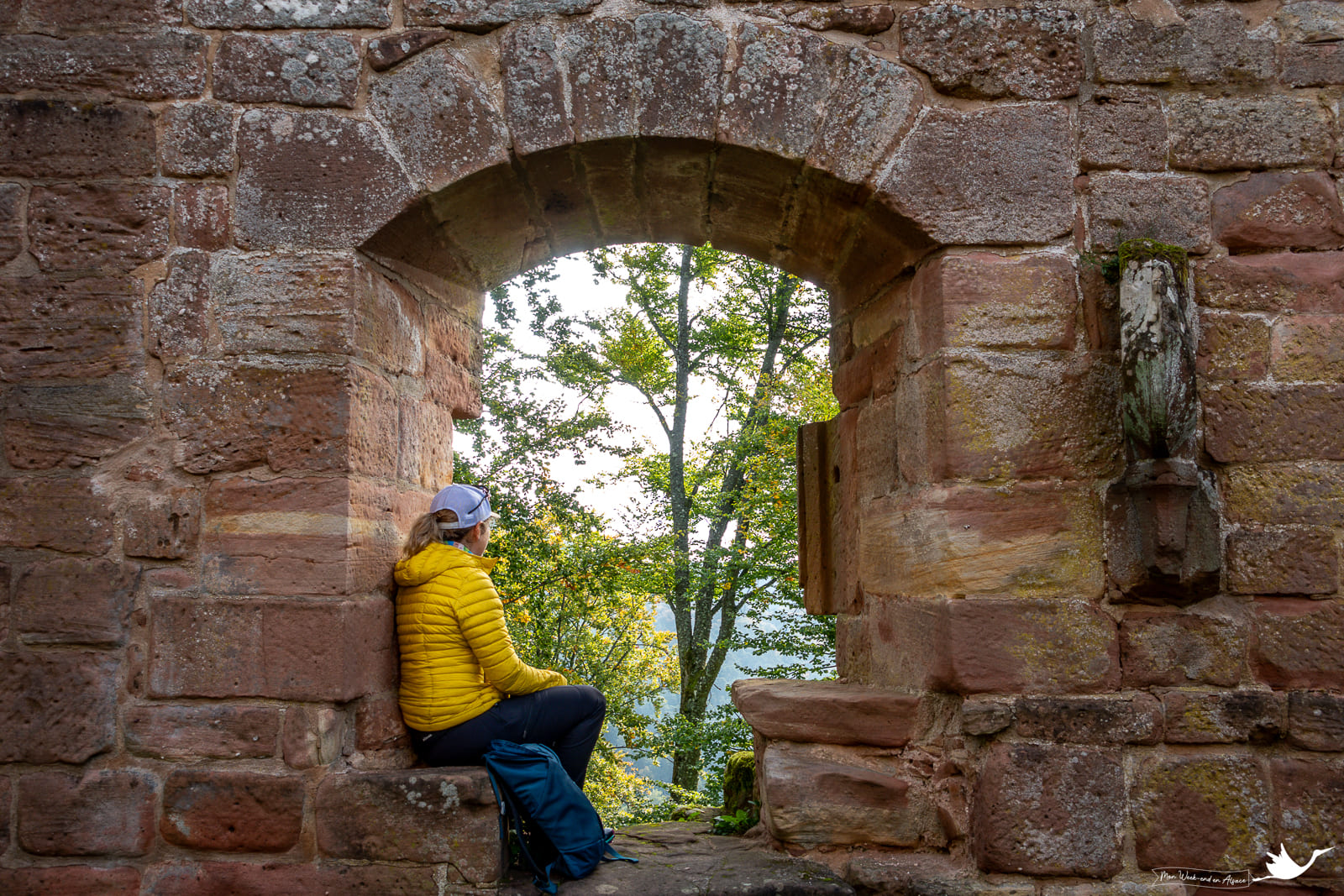
Alsace has many castles. Many of them are in ruins but, good news, many of them are also very well preserved! The best-known and most impressive is undoubtedly the Château du Haut-Koenigsbourg, a must-see in Alsace, but other castles are also of interest, such as Château du Haut-Barr, Château du Hohlandsbourg, Château du Fleckenstein, Château du Lichtenberg and others. Not to mention the ruined castles that are also great places to walk.

23. Travel Back in Time at the Alsace Ecomuseum, an Open-Air Museum
The Ecomuseum of Alsace is an atypical museum: it is an open-air museum, conceived as a big village in which one walks. It includes authentic half-timbered houses saved from destruction (Alsatian houses have the particularity of being able to be dismantled: the houses of the ecomuseum were therefore dismantled and transported here in order to preserve the heritage) and many animations. The program is impressive and appealing for young and old: I love this place! Its visit is one of the best ways to dive into the Alsatian culture.


24. Understanding Our Turbulent History at Landmarks of Remembrance
Alsace has had a rather complex history: its proximity to Germany made it one of the strategic locations for the two World Wars, the scars of which remain.
In my opinion, delving into this painful chapter of history through remembrance tourism is very valuable: knowledge is the path to understanding—and thus to ensuring that history is not repeated! Among the most visited memorial sites are the former Struthof concentration camp, the Alsace-Moselle Memorial,the Hartmannswillerkopf, and the Linge Memorial Museum.

25. Meet traditional potters in Soufflenheim and Betschdorf
The potteries of Alsace are famous for their quality. It is possible to admire the work of the potters and, of course, to shop directly in the two potters’ villages, Soufflenheim (which produces clay pottery, for firing) and Betschdorf (which produces stoneware pottery, for conservation). Be careful, if you buy them elsewhere, especially in very touristy villages, there are many counterfeits!


26. Marvel at the legendary craftsmanship of the master glassmakers and crystal artisans
Northwestern Alsace has a rich history in the field of glass and crystal manufacturing. There are still a few active sites in this area between Alsace and Lorraine. For example, this is where you’ll find the Lalique factory (which isn’t open to visitors, but you can visit the beautiful Lalique Museum), the Saint-Louis Crystal Factory, and the International Center for Glass Art in Meisenthal. These are truly fascinating places to visit!


27. Venture underground to discover the extraordinary history of mining in Alsace
Ok, it may not be a must-see, but it is unusual and super interesting! Alsace has in the past exploited potash and silver mines. You can follow in the footsteps of this mining history by visiting the Carreau Rodolphe or former silver mines .


Family Outings
28. See storks and monkeys roaming freely in wildlife parks
L’Alsace comporte quelques parcs animaliers vraiment sympathiques à visiter en famille: la Montagne des Singes et ses macaques de Barbarie en liberté, la Volerie des Aigles et ses impressionnants rapaces ou encore le Naturoparc, qui a notamment été à l’initiative de la sauvegarde des cigognes, loutres et hamsters d’Alsace. Vos enfants (et vous-même) devraient adorer!


29. Get your fill of thrills at Europa-Park and Parc du Petit Prince
Alsace has a number of theme parks, including the Parc du Petit Prince. But above all, it is located just a stone’s throw from the famous Europapark located in Germany and elected many times best amusement park in Europe and even in the world! Yes, just that!


Lifestyle and Memories
30. Take on the (easy!) challenge of visiting and exploring Alsace without a car
We don’t always realize it, but it’s perfectly possible to visit Alsace without a car! In particular, we are fortunate to have a good rail network in the region. Of course, we won’t be able to do everything, but there is already plenty to do. Here’s a list of ideas for visits and activities to do without a car, as well as an entire weekend program.


31. Treat yourself to a trip to our neighbors’ country by “jumping the border”
One of the things I love about Alsace? Its location in the heart of Europe, which makes it easy to visit many countries. This is, of course, especially true for Germany and Switzerland.
All you have to do is take one of the bridges across the Rhine to get to Germany, so it’s easy to do by car, bike, on foot, or even by tram from Strasbourg! On the Swiss side, the border lies south of Alsace, and it’s easy to visit the lovely city of Basel, for example, during a stay in Alsace. I love this mix of cultures!


32. Treat yourself to a relaxing getaway at an exceptional spa
Want to bubble? We’re lucky to have a number of top-quality spas in Alsace, my favorite being the Spa de la Cheneaudière. Don’t hesitate to go and have a look at Germany, there are beautiful spas at very affordable prices (just don’t be bothered by the naturist areas, very common in Germany).


33. Fill your suitcase with authentic, 100% local souvenirs
Fortunately, the region still counts a good number of craftsmen making objects with talent and love. What if you bought your souvenirs from Alsace instead of bringing back a stuffed stork made in China? 😉


Major Seasonal Events
34. Experience the pure magic of traditional Christmas markets in December
The Christmas markets in Alsace are certainly THE most famous thing. It must be said that this is a real tradition, which has absolutely nothing to do with the purely commercial side of the Christmas markets that have been flourishing for several years around the world. Of course, it is also commercial, but overall the quality and craftsmanship are still very well honored; As for the magical atmosphere of Alsatian cities and villages richly decorated for Christmas … I think you have to have experienced it once in your life, honestly!


35. Dive into the confetti at the Rhineland carnivals in March
The carnival is a real tradition in Alsace, just like in Germany or in Basel (Switzerland). The number of carnivals organized between February and March is really impressive! I can for example advise you to go and see the one in Mulhouse, in Sélestat or Rosheim to get into the atmosphere (but there are many others!).


Surviving the Pronunciation of Alsatian Village Names!
Here is a last experience to live in Alsace: pronounce the names of the villages. Yes, I know, it’s not easy at first, but I promise you that you will get used to it! Come on, a little training before your vacations to get you in the bath: Scharrachbergheim, Oberschaeffolsheim, Krautergerstheim, Voegtlinshoffen, Helfrantzkirch… Oh, the sweet melody 😉


visiting alsace responsibly
What a pleasure, this feeling of freedom that invades us when we travel and make discoveries, even close to home … but for all that, let ‘s not be careless (or even reckless) with our beautiful planet and splendid Alsace!
Suitcase
In recent years, solid cosmetics have become widely democratized: shampoos, soaps, toothpastes, deodorants – small, space-saving blocks to test.
For travel documents, there is no need to print multiple copies of everything, just make sure that everything is in your emails, accessible from a smartphone or computer. For travel guides, they are available online (this blog on Alsace is a must!) or can be borrowed at the media library.
If you need equipment or clothes especially for your vacations, perhaps a relative will lend it to you, otherwise think of second hand (Bon Coin, Vinted, Emmaüs for example) before buying new!
Meals
On the go, take-out is convenient but often plastic-intensive – all for a few minutes’ use only. Think about reusable containers (with a sexy design now!): water bottle, 3-in-1 cutlery, folding cup will be your trifecta, with a bento box as a bonus if you have a little more space.
As for the material, I prefer stainless steel, which is a little heavier, but non-toxic, unbreakable, does not absorb odors and can withstand both hot and cold.
Also, think about slipping in some fabric items – very light and always handy: shopping bag, pouches for bulk food, cloth towel to wash everything off. And of course, take all your garbage with you, there should be nothing left on site!
Travel and activities
The preference is for soft mobility: we are lucky, the region lends itself rather well to it! On foot or by bike in the cities, by train, bus, carpool or bike outside when possible. Do not hesitate to consult our article on the Alsace without car.
As far as activities are concerned, you’ll have to use your common sense: don ‘t go off the beaten track, don’t pull up flowers and plants, don’t go into areas where the flora and fauna are protected… Respect the (beautiful!) environment you are in 🙂
Souvenirs
Would you like to bring back some souvenirs from your stay in our region? Great idea, but not just anything 😉 Opt for locally made artisanal products rather than a stuffed stork made in China or a bad industrial kougelhopf.
For example, if you want to bring back Alsatian pottery, be sure to buy genuine Soufflenheim pottery rather than Asian copies…
To go further
In terms of accommodation, certified establishments are becoming more widespread and allow for attention to be paid to the environment (waste sorting, water management, laundry impact, local products, etc.). Don’t hesitate to ask directly to the hosts, some of them are not especially labeled but have an interesting approach!