



Visit Strasbourg’s Petite France: complete guide, history and secrets

It's impossible to visit Strasbourg without falling under the spell of Petite France. The jewel of the Grande Île, aUNESCO World Heritage site, this historic district seduces visitors with its romantic canals and half-timbered houses. I'll take you on an exploration of its cobbled streets to discover its fascinating history and my best local addresses.

Summary
Practical information for your visit
- Location: South-west of the Grande Île (around Place Benjamin Zix if you want an address)
- Access: Tram A/D (Langstross) or, a little further on, B/C/F (Homme de Fer or or Alt Winmärik).
- Budget: Free access.
- Visiting time: 2 hours to an afternoon stroll
- À proximité : La Grand’Rue pour ses boutiques et ses restaurants, le Musée d’Art Moderne et Contemporain (MAMCS) (juste après le Barrage Vauban), la Place Kléber (5 minutes à pied) la Cathédrale Notre-Dame (10 min à pied),
The surprising (and dark) origins of the name “Petite France”.
Saviez-vous que le nom de ce quartier idyllique n’a, à l’origine, rien de romantique? Les cordonniers sont souvent les plus mal chaussés et il y a fort à parier que beaucoup de Strasbourgeois ignorent l’origine de ce nom!
To understand its source, we need to go back to the 15th century. At the time, an unknown disease was making its appearance: syphilis, nicknamed the “French disease”.
Les premiers malades à Strasbourg étaient des mercenaires français et suisses engagés par le roi Charles VIII. Rejetés par la population, ils furent regroupés dans un établissement dédié : l’hôpital des syphilitiques, ouvert jusqu’en 1687. Le bâtiment était surnommé “Zum Französel” (Le petit Français), nom qui, par extension, fut donné à tout le quartier : la Petite France.
L’actuel Quai de la Petite France, aujourd’hui prisé pour ses promenades, portait autrefois le nom beaucoup moins glamour de “ruelle des syphilitiques”. Le quartier a pourtant aussi vu naître des figures illustres, comme le Général Jean-Baptiste Kléber ou l’illustrateur de l’armée napoléonnienne Benjamin Zix, qui ont marqué l’histoire de Strasbourg.
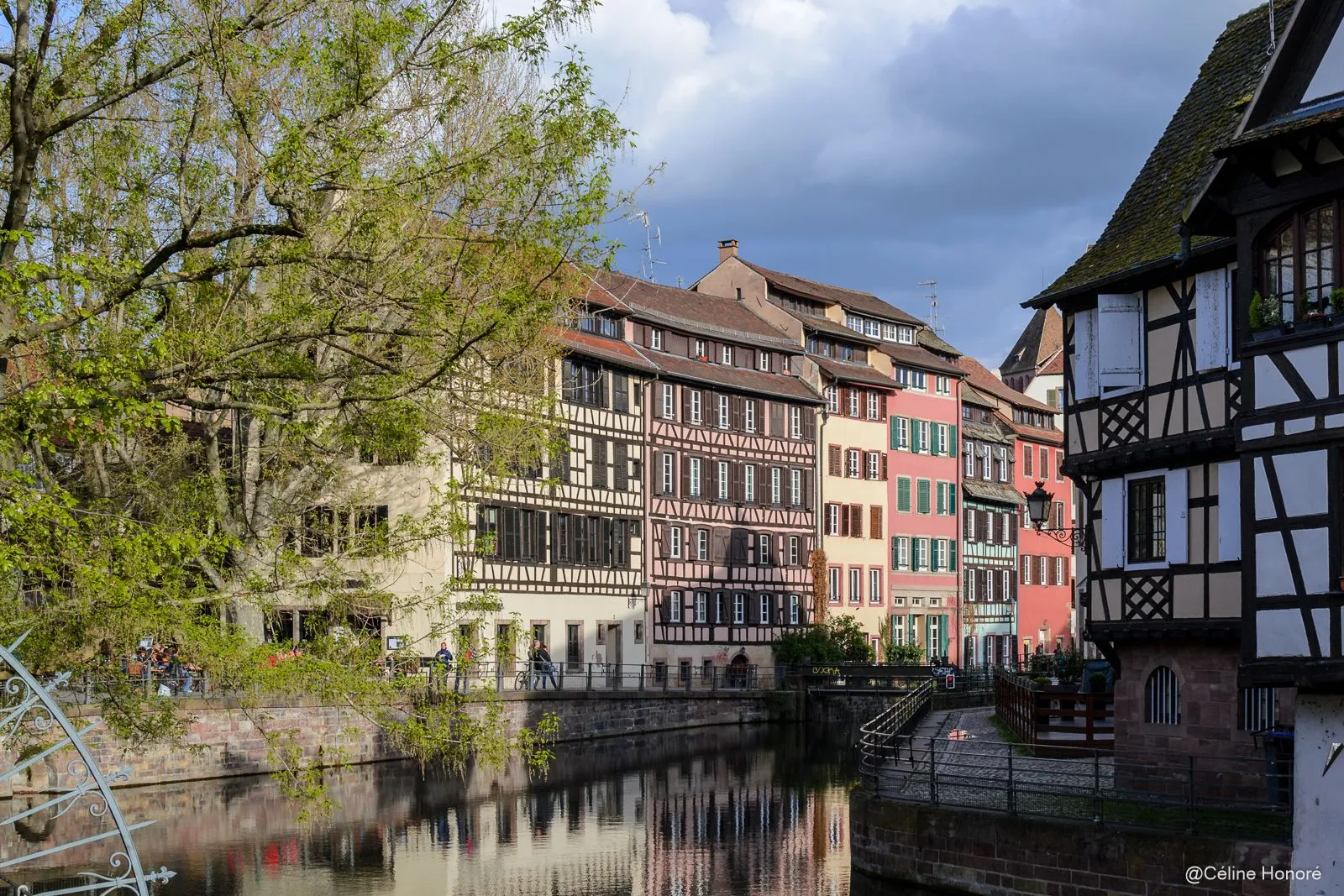

What to see in Petite France My itinerary
Avec ses anciennes maisons d’artisans à colombages, ses Ponts couverts et ses écluses, c’est le quartier le plus pittoresque de Strasbourg. La Petite France se découvre idéalement à pied, en battant ses petites ruelles pavées, ou en glissant sur l’Ill à bord d’un bateau. Je vous emmène pour une promenade au cœur de ce quartier historique — un peu délaissé par les Strasbourgeois en été au profit des touristes — à la découverte de de ses ruelles étroites, son histoire tragique (souvent méconnue) et de son architecture unique. Voilà mon idée d’itinéraire de balade pour visiter la Petite France.
The Maison des Tanneurs, a Strasbourg icon
C’est le point de départ idéal, juste après la place Benjamin Zix où nous reviendrons en fin de balade. Avec ses maisons à colombages, ses canaux dédiés à la navigation et à l’artisanat, la Petite France était autrefois un petit village commerçant dans lequel siégeait la corporation des tanneurs, une profession très répandue à l’époque.
La Maison des Tanneurs, qui date de 1572, est un des vestiges de l’époque, célèbre pour ses galeries ouvertes sous les toits, où les artisans faisaient sécher les peaux de bêtes. Ces anciens séchoirs ont depuis été transformées en restaurant. Fini le cuir du quartier des Tanneurs, la seule peau tendue ici aujourd’hui est celle de l’estomac et le cuir de la ceinture que l’on desserre après un repas très copieux !
On y créait également un combustible, le Lökhas, avec les résidus d’écorces de chêne utilisé pour le tannage et que l’on compressait ensuite sous la forme d’une briquette qui ressemblait à celle du munster. Le Lökhas a donné son nom au restaurant situé rue du Bain aux Plantes.
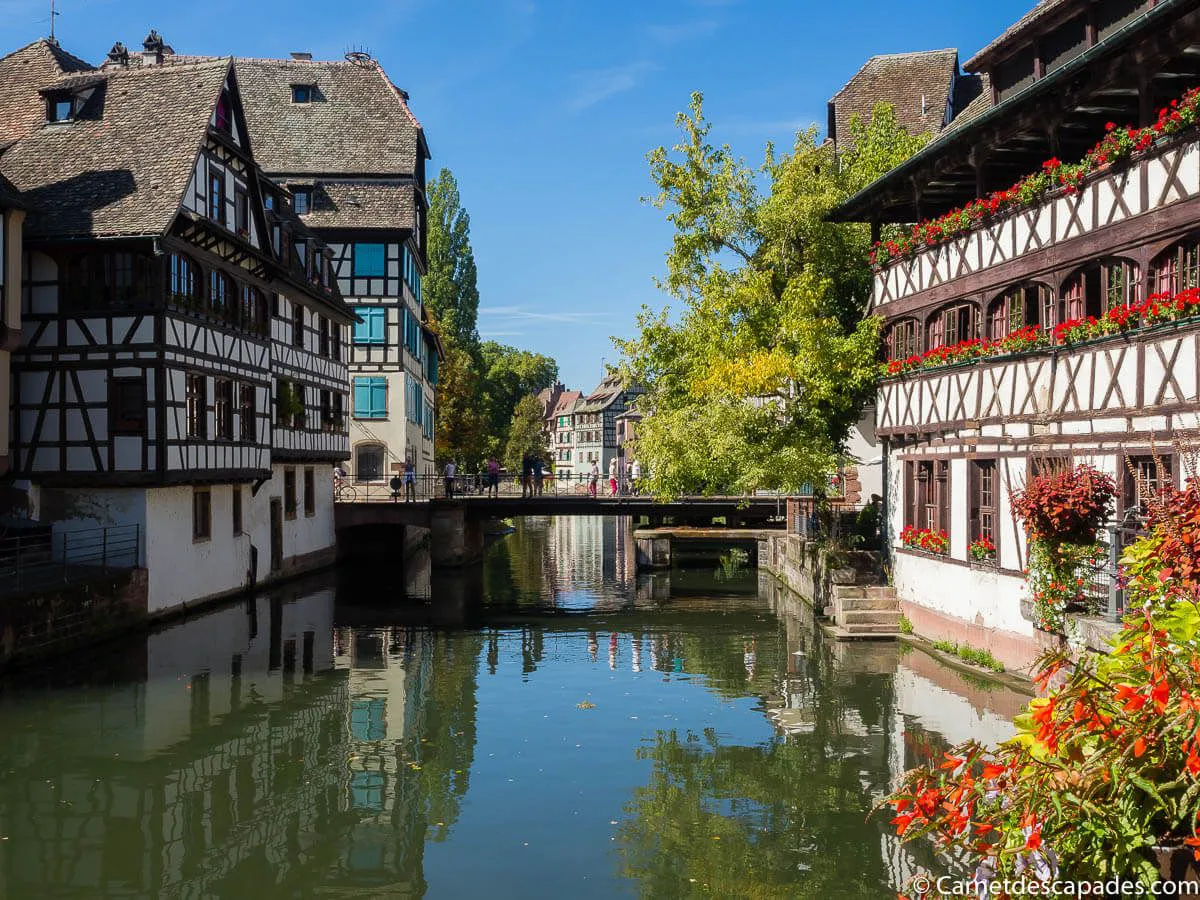
Pont du Faisan (the famous swing bridge)
Autrefois chemin de halage où les chevaux tiraient des embarcations, puis simple passerelle à la Renaissance, le Pont du Faisan devient un pont-levis en 1869 puis un pont tournant en 1888 qui voit passer plus d’une quarantaine de bateaux par jour. Sa particularité ? Il pivote pour laisser passer les bateaux-mouches.
C’est devenu aujourd’hui le spot le plus “Instagrammable” du quartier, le pont sur lequel on se prend en photo avec la Maison des Tanneurs, la Place Benjamin Zix et sa grande terrasse en arrière-plan. Et bien sûr un point stratégique pour regarder glisser les bateaux-croisières.
My tip: Stay a few minutes on the quay to observe the mechanism of the swing bridge. It’s fascinating, even more so for children!

Observing the operation of locks
Strasbourg is home to several locks that are still in operation, where you can watch the water bubble up and the boats go up and down. Watching the precise ballet of boat captains rushing through the narrow locks is always a sight enjoyed by adults and children alike!
Deux façons d’expérimenter leur fonctionnement :
- aux premières loges, à bord d’un bateau-croisière Batorama, ou
- on land during the lifting of the Faisan bridge.
L’écluse la plus connue est l’écluse des anciennes Glacières (écluse A) située au niveau du Quai des Moulins juste après le passage de la Passerelle des Anciennes Glacières. Un second point d’observation se situe à l’écluse B, Quai Turckheim.
Les anciennes Glacières: a hidden industrial vestige
La Petite France cache un secret de son passé industriel. Juste à côté des canaux, cette ancienne usine créée en 1897 utilisait l’énergie hydraulique de l’Ill pour produire des pains de glace. À l’époque, ils étaient indispensables aux brasseurs, aux bouchers mais aussi à d’autres commerçants et aux particuliers de Strasbourg.
- Le détail insolite : Bien que l’usine ait fermé, ses turbines sont classées aux Monuments Historiques. Elles sont aujourd’hui magnifiquement intégrées dans le décor luxueux de l’Hôtel 5* Régent Petite France.
- How to see them? The mechanism can be seen through a large glass roof from the footbridge over the former iceworks. For a more complete visit, you’ll have to wait for the Heritage Days, or join a group on request.
The Covered Bridges and the Vauban Dam: the most beautiful view
Don’t let their name fool you: the Ponts Couverts haven’t had a roof since the 18th century! But they’re no less impressive for their four fortified towers. In spring, don’t miss the spectacular giant wisteria at the Maison des Ponts Couverts… And very popular with visitors, who all come to take a photo.
Le Barrage Vauban, situé juste en face, a été imaginé par Vauban, l’architecte de Louis XIV. Cet édifice éponyme qui enjambe l’Ill constitue avec les Ponts Couverts l’ancien système de défense de la ville. Je vous conseille d’aller au Barrage Vauban, qui est accessible gratuitement, pour deux raisons:
- Climb up to the panoramic terrace of the Barrage Vauban. It’s from here that you’ll take one of Strasbourg’s iconic photos, with the Ponts Couverts towers, Petite France and the Cathedral spire in the background. One of the prettiest views in town!
- Discover the covered gallery housing casts of Cathedral statues.

La Petite France au fil de l’eau à bord d’un bateau
To discover the district from a different angle, a boat trip is a must. You have two options:
- Batorama : l’option classique et touristique, pour découvrir la ville, son histoire, ses quartiers et ses monuments emblématiques c’est d’embarquer à bord d’un bateau mouche. Grande île, Petite France, Neustadt, Quartier Européen et institutions, Batorama propose plusieurs circuits, dont le circuit rouge (1h10, le plus complet, passant par la Petite France) et le circuit orange (45 min) — embarcadère Place du Marché aux Poissons.
- Marin d’Eau Douce : pour découvrir Strasbourg au fil de l’eau et en toute autonomie à bord d’un petit bateau électrique sans permis. Au départ de la base nautique Marin d’Eau Douce (Quai du Woerthel), plusieurs itinéraires d’1h à une journée (6h) sont proposés pour découvrir les incontournables, tout en cassant la croûte à bord. On peut aussi lever l’ancre vers le sud de la ville, la balade est y plus champêtre et reposante. Attention, vous ne pourrez pas passer par la Petite France elle-même: les écluses sont interdites à la navigation à part pour les bateaux Batorama (ce serait trop dangereux!).


A green break between two channels
If you’re visiting Strasbourg with the family, stop off at the Squares Louis Weiss or des Moulins, wedged between the canals. Well-landscaped with play areas, they’re the perfect place to take a break in the shade while the kids let off steam, with a breathtaking view over the Ill. Thanks to wooden tables and benches, you can also enjoy breakfast in the sun, picnics and even improvised pétanque and barbecues in the early evening.

Un apéro au bord de l’Ill pour finir la journée
To round off an afternoon full of discoveries, there’s nothing like relaxing by the water. The atmosphere of the district changes at the end of the day and becomes even more magical. Three options to suit your mood:
- Rendez-vous au Quai de la Bruche autour d’un verre de vin et d’une Flammkuech sous le platane du Petit Bois Vert. L’endroit est encore plus agréable avec la petite brise du soir et ses jolies loupiotes, pour une ambiance guinguette.
- Si vous préférez être au centre de l’effervescence, retournez Place Benjamin Zix. La terrasse de La Corde à Linge, à l’ombre de son grand marronnier, est une institution. C’est l’endroit idéal pour voir passer les promeneurs tout en dégustant un plat de spaetzle à la Corde à Linge ou à un bon Bibeleskäs.
- Finally, picnicking on the quayside is also a popular option with locals.

The Magic of Christmas at Petite France
In December, the neighborhood changes its face. Terraces give way to wooden chalets and the smell of cinnamon. In my opinion, this is one of the most authentic places in the Strasbourg Christmas Market.
- Place Benjamin Zix: This is where the heart of Christmas beats in the neighborhood. It’s the place to come for the sublime Christmas baubles from Verrerie de Meisenthal. Here’s a tip from the locals: be prepared to come early and stand in line if you hope to leave with yours, as they’re very much in demand!
- Square Louise Weiss: home to the “Irréductibles Petits Producteurs Alsaciens” market. It’s the ideal place to find genuine local produce and gourmet foods, far from the industrial trinkets.
- Le Marché OFF (Place Grimmeissen) : Juste à côté, c’est le marché que nous les Strasbourgeois préférons. Alternatif, responsable et engagé, nettement moins touristique, c’est le marché des créateurs locaux. Illustrations, objets de décorations, produits alimentaires bio et locaux, c’est l’endroit où dénicher des cadeaux éthiques et originaux.


Where to eat and sleep in Petite France
Where to stay in the heart of the district?
Here are our recommended hotels in the heart of the Petite France district:
- Hôtel ClapClap Strasbourg – Trendy and dynamic, this is a great address full of life.
- Hôtel & Spa le Bouclier d’Or – A superb historic hotel in the heart of Petite France.
- Hôtel & Spa Régent Petite France – Unquestionably one of Strasbourg’s finest hotels!
- Hotel restaurant Chut – An intimate, quiet address in a prime location in the…
My favorite gourmet breaks
Le programme est ambitieux pour découvrir la Petite France, alors on n’oublie pas de faire quelques pauses hydratation et restauration pour recharger les batteries:
- Café Bretelles: for a quality coffee break! This cute little coffee-shop is famous for its homemade Twix and cheesecake (tried and tested).
- Corde à linge : pour déguster un généreux plat de spaetzle, les emblématiques pâtes alsaciennes, sur l’une des plus jolies terrasses de la ville.
- Art Café : après la visite, prenez un allongé sur la terrasse panoramique du Musée d’Art Moderne et Contemporain et savourez la vue !
- Abattoir Café : juste à côté de l’écluse B, l’ambiance est jeune, détendue, les tartes flambées y sont très bonnes et peuvent se déguster sur la terrasse au fond.
- For traditional Alsatian cuisine, grab a table at Maison des Tanneurs or Petit Bois Vert for a tarte flambée on the terrace, or La Fignette. A little further on, the Fink Stuebel is a great address.
- Pour les souvenirs à croquer, passage obligé à la boutique Mireille Oster, la reine du pain d’épices. Bouchées, pavés, barres à partager, elle déborde de gourmandises.
Enfin, on ne trouve pas que des moules à kouglof ou des terrines à Baeckeoffe à la Petite France (chez Plaisirs d’Alsace) mais aussi plusieurs échoppes qui distillent la magie de Noël tout au long de l’année comme Un Noël en Alsace.
More gourmet addresses?
Carte de la Petite France : points d’intérêt et bonnes adresses
To make your exploration easier, I’ve put together this interactive map of all the must-sees in the area, as well as my favorite addresses for a gourmet break or a magical night by the water. Feel free to open it on your phone during your visit!
FAQ : Your questions about Strasbourg’s Petite France
Where is Strasbourg’s Petite France?
The Petite France district lies to the southwest of the Grande Île, Strasbourg’s historic center. It’s within easy walking distance of the Place de l’Homme de Fer and the Grand Rue.
How long does it take to visit Petite France?
Allow around 2 hours for a brisk stroll from the Ponts Couverts to Place Benjamin Zix, passing through some pretty little streets. If you’d like to take a boat trip, a guided tour or try out some of the best addresses, allow a whole afternoon.
How do I get to Petite France by public transport?
The easiest way to get there is by streetcar. Lines A and D stop at “Langstross Grand’Rue” and lines B, C and F at “Homme de Fer” or “Alt Winmärik”, all less than 5 minutes’ walk from the district.
Is there a charge for visiting the Petite France district?
No, access to the historic district, the Ponts Couverts and the Barrage Vauban terrace is completely free and open all year round.
This article contains affiliate links.