



Hartmannswillerkopf (Vieil-Armand) – Franco-German Historial and battlefield
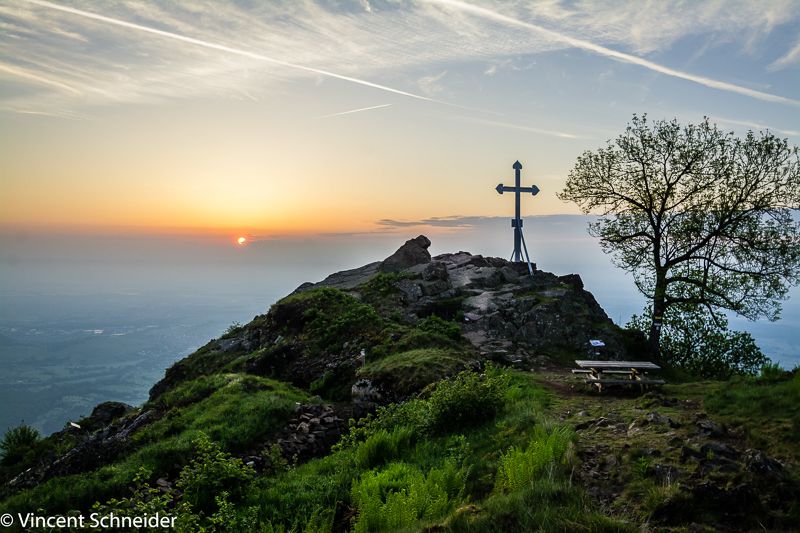
To the south of the route des Crêtes, at an altitude of over 900 m, the Hartmannswillerkopf (or Vieil-Armand, often abbreviated as HWK) was the scene of particularly violent clashes in 1915-1916. Let me take you to this memorial site: you can walk through authentic trenches, pay your respects at the crypt and cemetery, and then understand the context at the Franco-German Historial. How to organize your visit, how much time to allow, and what to save for another time? I'll tell you everything.

Summary
The essentials at a glance
- 📍 Location: D431 (route des Crêtes), col du Silberloch, 68700 Wattwiller
- ⏱️ Recommended duration: about 3 hours on site (battlefield about 2 hours, Historial about 1 hour)
- 👥 Audience: history buffs and families (free entry to the Historial for children under 10 accompanied by an adult). Historial accessible to people with reduced mobility, battlefield is sloped
- 💶 Budget: € (battlefield is free access, Historial is €7 for individual tickets, 2026 rates)
- 📅 Opening: Historial and crypt from late March to mid-November approximately (dates to be confirmed each year on the official website), battlefield accessible all year round but not recommended in winter
My opinion on the Hartmannswillerkopf
I liked
- The tour of the battlefield with its interpretation panels
- The impressive video with the animated map in the center of the exhibition
- The almond-shaped architecture blends perfectly with the landscape
I liked a little less
- The Historial and crypt are closed in winter, and the battlefield is not recommended during this season
History of the Hartmannswillerkopf: from battle to reconciliation
This mountain with multiple names (linked to changes in nationality and therefore language) was the scene of particularly violent clashes during the First World War (notably during the winter of 1915-1916). The intensity of the fighting as well as the harshness of the conditions (extremely cold winter) made the Hartmannswillerkopf an emblematic battlefield of the Vosges mountains.
As the clashes did not result in a victory for either side, the Vieil-Armand (which can therefore be considered neutral) was chosen 100 years later to symbolize reconciliation and celebrate Franco-German friendship.
The visit to the site is undertaken in two stages, which you can do in either order:
- 🪦 The cemetery and the crypt
- 🥾 The battlefield, via the 4.5 km interpretation trail (which can be shortened if necessary)
- 🏛️ The Historial, to understand the historical context and the life of soldiers in combat


Visiting the Vieil-Armand battlefield
National monument, crypt, and necropolis
The national monument, the crypt (which is well worth a visit), and the impressive cemetery can be visited in about twenty minutes, according to the official website.
⏰ Note: the crypt closes between 12:30 PM and 1:30 PM.
Authentic trenches and interpretation trail
After a few hundred meters of walking behind the crypt and the impressive cemetery, you are confronted with the traces left in the mountain by the fighting: shell impacts, barbed wire, etc. You will have to walk another kilometer or so to discover and explore the battlefield trenches (100% authentic, it should be noted). Along the way, panels explain the difference between French and German trenches, their evolution, their frightening proximity, and even some anecdotes!
🥾 Note: the battlefield is accessible on foot all year round, but not recommended in winter. Bicycles are prohibited, and dogs are allowed on a leash.
Cross of the Volunteers and monument of the 152nd RI
After passing the summit cross, continue to the Cross of the Volunteers to enjoy the panoramic view over the Alsace plain (certainly one of the reasons for the determination of both sides to occupy this spot). Below, don’t miss the impressive monument of the 152nd Infantry Regiment (known as the Red Devils).


Also on the blog
The Franco-German Historial: exhibition, film, and terrace
Architecture and thematic tour
The building housing the Franco-German Historial is already interesting from the outside: this “almond” shape set into the hillside, its green setting, and its view over the Alsace plain (you can see the Bernese Alps on a clear day) create a very aesthetic ensemble! Now, let’s go inside!
After a first video explaining the context in which the war broke out, you will find yourself immersed in the atmosphere of the battlefield through different themes: transport and logistics, uniforms, and equipment.
This conceptual approach (rather than purely chronological) allows you to visit at your own pace and according to your interests. Multimedia (touch screens, videos, sounds) and the possibility to touch certain items make for a more lively visit.
The film and the animated relief map
The central element of the exhibition is a round room where a film made from animated photos taken on the battlefield is shown. These videos are accompanied by authentic and poignant testimonies from German and French soldiers (bilingual video).
The chronology of the fighting that took place at Hartmannswillerkopf is recalled in real-time during the video by an animated relief map of the battlefield. The result is truly impressive: don’t miss a moment of it!
Reconstructions, soldier database, and panoramic terrace
Around this auditorium, you will discover reconstructions of shelters, trenches (in their original appearance), and excavations. A touch screen is also available so that visitors with information on soldiers who fought at Hartmannswillerkopf can enter it into a database: a great initiative to keep the memory of these soldiers alive!
To finish your visit, consider taking a walk on the panoramic terrace, for a drink or simply to enjoy the view!


What to remember about the Vieil-Armand
- 🪖 Plan for about 3 hours: about 2 hours for the battlefield and 1 hour for the Historial
- 🔁 The visit is done in two parts, in the order you prefer
- 🆓 Free access to the battlefield, Historial is €7 (2026 individual rate)
- ♿ Historial fully accessible to people with reduced mobility, battlefield is sloped
- ❄️ Historial and crypt closed in winter
To extend your day, head to the Linge Memorial Museum in Orbey or plan your itinerary with my Route des Crêtes by car guide.
Practical information
Rates
2026 Historial Rates:
- Individual visitors: €7
- Children under 18 and students (with proof): €6
- Adult groups (by reservation): €6
- School groups (by reservation): €5
- Children under 10 accompanied by an adult: free entry
- Holders of the Museums-Pass-Musées, Pass’Alsace, and Pass Patrimoine: free entry
Access to the battlefield is free: just follow the marked trails and interpretation panels (self-guided tour). Please note, you should plan for about a twenty-minute approach walk. Access to the crypt is free. Payment on site by cash, check, credit card, or ANCV holiday vouchers. See rates on the official website.
Schedules
- Historial: Monday to Saturday from 10 AM to 5 PM, Sundays and public holidays from 10 AM to 6 PM
- Crypt: from 10 AM to 12:30 PM then from 1:30 PM to 5 PM Monday to Saturday, until 6 PM on Sundays and public holidays
- Battlefield: accessible on foot all year round, but not recommended in winter
The site closes in winter because the route des Crêtes is not cleared of snow: the season dates are to be confirmed each year. See opening hours on the official website.
Guided tours
Guided tours are available by reservation (09 71 00 88 77), in French, German, English, and Alsatian. The rate applies per guide and not per person, and entry to the Historial is not included:
- Visit to the Historial: 1 hour, €95 per guide
- Visit to the national monument, crypt, and necropolis: 1 hour, €95 per guide
- Short visit to the battlefield: 2 hours, €115 per guide
- In-depth visit to the battlefield: 3 hours, €140 per guide
Accessibility
The Historial is fully accessible to people with reduced mobility, with two reserved parking spaces near the entrance, a cafeteria, and adapted restrooms.
At the national monument, only the vestibule and the trench of honor are wheelchair accessible.
On the battlefield, the slope sometimes makes access complex.
Guide and assistance dogs are accepted everywhere; other dogs are allowed on a leash on the former battlefield only. See accessibility on the official website.
Access
By car
The address is as follows: D431 (route des Crêtes) / Col du Silberloch – Lieu-dit Vieil Armand, 68700 Wattwiller. Parking is free. You should allow:
- 30 km from Mulhouse (about 38 min)
- 48 km from Colmar (about 50 min)
- 123 km from Strasbourg (about 1h30)
By bike
A bicycle parking area with a charging station for electric bikes is available on site. Bicycles are prohibited on the battlefield, at the national monument, and at the necropolis.
By public transport
The site is served by the Navette des Crêtes shuttle, which runs in summer.
Frequently asked questions about visiting the Vieil-Armand
How long does it take to visit the Hartmannswillerkopf?
Allow about 3 hours on site: about 2 hours for the battlefield and 1 hour for the Historial. The interpretation trail is 4.5 km long and can be shortened, and you should plan for about a twenty-minute approach walk. According to the official website, the short visit to the battlefield takes 1 to 1.5 hours and the in-depth visit 2 to 3 hours.
Is the Vieil-Armand battlefield free?
Yes, access to the battlefield is free. The Historial costs €7 for an individual ticket (2026 rates), with free entry for children under 10 accompanied by an adult and for holders of the Museums-Pass-Musées, Pass’Alsace, or Pass Patrimoine.
When is the Vieil-Armand site closed?
The Historial and crypt close in winter, from approximately mid-November to late March (exact dates to be confirmed on the official website). The battlefield remains accessible on foot all year round, but it is not recommended in winter.
Can you visit the site with a dog?
Yes, but only on the former battlefield, where dogs are allowed on a leash. They are not allowed in the Historial, the national monument, or the necropolis, except for guide and assistance dogs.
Is the Vieil-Armand site accessible to people with reduced mobility?
Yes for the Historial, which is fully accessible, with two reserved parking spaces near the entrance. The battlefield is sloped and access can sometimes be complex. At the national monument, only the vestibule and the trench of honor are wheelchair accessible.