



Visit of the European Parliament in Strasbourg
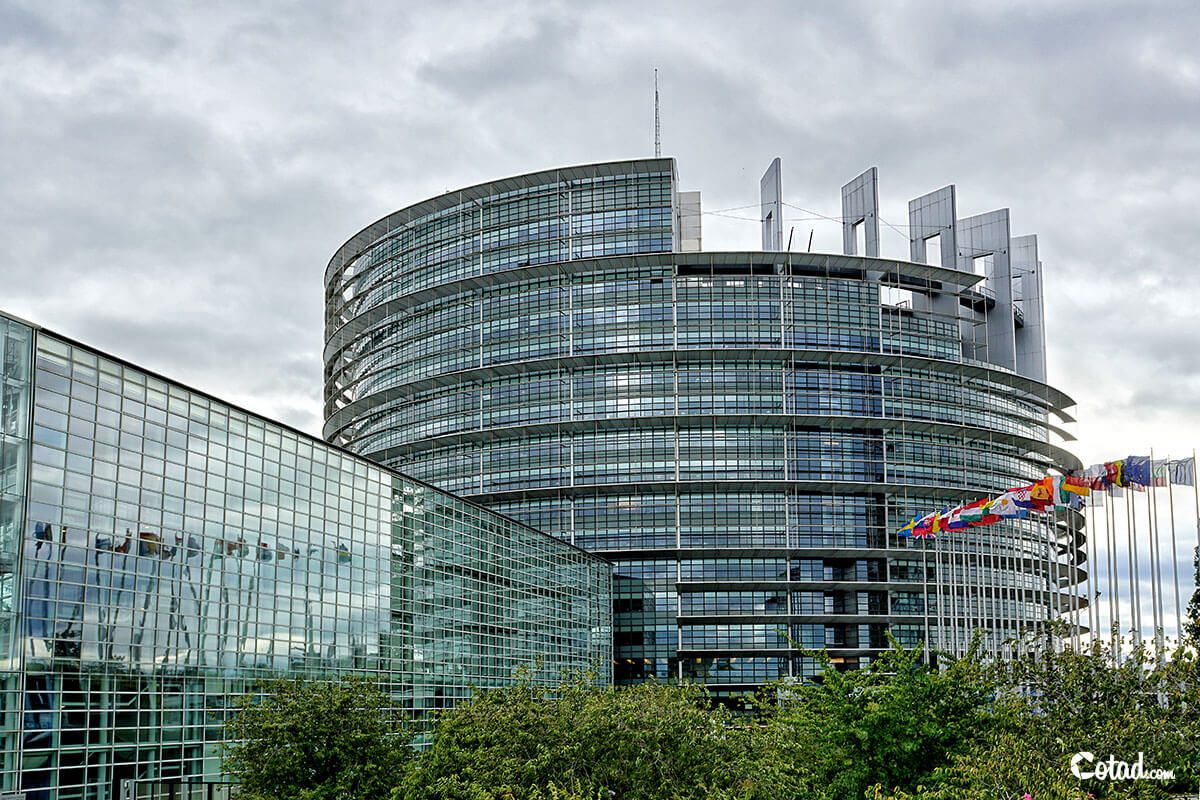
Strasbourg shares the title of European capital with Brussels. The good news is that you can visit the European Parliament in Strasbourg and learn more about the European institutions. It’s a great way to broaden your horizons, even if it’s raining in Strasbourg.

Summary
The Essentials at a Glance
- 📍 The location: The European Parliament, in Strasbourg’s European Quarter.
- 💶 Price: Free.
- 🛂 Reservations: Not required outside of plenary sessions; required during sessions (except Monday mornings, Fridays, and Saturdays).
- 🪪 What to bring: A valid form of identification—required in all cases.
My Thoughts on the Tour of the European Parliament
I liked
- The architecture of the buildings of the European institutions
- Tours are available year-round
- The possibility to attend the plenary sessions of the European Parliament in the hemicycle
- The interactive and playful side of the Parlamentarium
I liked less
- Security measures that are necessary but restrictive for the visit
Where is the European Parliament located?
The European Parliament is located in both Brussels and Strasbourg. Parliamentary sessions are held every month in Strasbourg, during which the Parliament meets in its dedicated building. During these periods, Strasbourg is bustling with activity. The best restaurants are fully booked, a strange procession of large black sedans with Belgian license plates winds through the streets, and it becomes difficult to find a place to stay!
In Strasbourg, it is located in the European district, near the Parc de l’Orangerie and the Wacken and Robertsau districts, in the north of the city. Several European institutions are located in the European district of Strasbourg: the European Parliament, the Council of Europe, the European Pharmacopoeia and the European Court of Human Rights (ECHR). The headquarters of the French-German television channel Arte is also located here.


Strasbourg, seat of the European Parliament since 1958
Strasbourg has been home to the European Parliament since 1958. That year, MEPs held their first session in March at the Maison de l’Europe, a temporary building constructed in Wacken for the Council of Europe. The two institutions would subsequently share the Palais de l’Europe, which was inaugurated in 1977 by President Giscard d’Estaing.
In view of the important development of the European Union, the Parliament quickly found itself cramped and the need to have its own building became obvious. On December 14, 1999, the European Parliament in Strasbourg inaugurated its new hemicycle, which welcomes MEPs during plenary sessions one week a month.


How can I visit the European Parliament in Strasbourg?
Standing majestically on the banks of the Ill with its soft, curved lines, the European Parliament building leaves neither Strasbourg residents nor visiting tourists indifferent. A visit to this heart of European democracy is therefore a must—and it’s completely free.
The details depend on the schedule:
- Outside of plenary session weeks (most of the year): self-guided tours for individuals and groups during opening hours, with no reservation required—you can use the “EP Visit Strasbourg” app or the tablets provided on site to guide you.
- During plenary session weeks (12 times a year, from Monday afternoon to Thursday at noon): Advance reservations are required to enter the chamber and observe the debates from the visitors’ gallery—except on Monday mornings, Fridays, and Saturdays, when individual visits are still possible without a reservation, though no debates are held on those days.
🪪 In any case, be sure to bring a valid form of identification: it is required to enter the buildings.


The Parlamentarium to discover Europe while having fun
The tour begins at the Parlamentarium Simone Veil, an interactive and engaging space where visitors can learn about Europe and its institutions. Touchscreens allow citizens to find the members of the European Parliament from their country or understand how the European institutional triangle works in a very educational way.
A movie theater offers a 360° film on European issues in the 24 official languages. Finally, an exhibition traces the career of Simone Veil, the first elected president of the European Parliament and the first woman to hold this position. Don’t forget to take your souvenir photo in the photo booth!
Bonus: If you’re a group of at least 16 people aged 14 and older, you may be able to take part in a role-playing game where you’ll step into the shoes of a Member of the European Parliament. Whether it’s committee work, press briefings, or even a mini-plenary session, participants get a fun, hands-on experience with the legislative process.


The visit of the hemicycle
Let’s now leave the Parlamentarium and take the escalators. The route is clearly marked to prevent visitors from getting lost in this immense building. Once at the top, we take off our video guide and headphones to explore the plenary chamber. From the gallery, the view of the 750 seats for members of the European Parliament—720 of which are currently occupied by MEPs elected in 2024—is impressive. The European flag flies proudly in the center, surrounded by the flags of the 27 member states. The tour is perfectly complemented by commentary and videos that you can enjoy at your own pace and in the language of your choice.
Take a look at the ceiling and notice those interesting wave-like patterns. It’s a rather ingenious lighting system that, beyond its aesthetic appeal, ensures that every member of parliament is properly lit, no matter where they’re seated in the chamber. The acoustics have also been carefully designed to ensure that parliamentary sessions run smoothly. On your way down, you can return to the Parlamentarium or head to the visitors’ cafeteria.


Also on the blog
Further ideas for visits: Lieu d’Europe
Let’s be honest, it’s not always easy to remember the role of the European institutions or to explain them to children. The history of the European Union, its great figures, its main achievements, its member countries… All this information has been summarized in a permanent exhibition, installed at the Lieu d’Europe in Strasbourg.
This former 18th-century country house, known as Villa Kaysersguet, once belonged to several prominent figures in Strasbourg. Located in the heart of Strasbourg’s European Quarter, it was renovated in 2013 to welcome the public free of charge and host events focused on European issues.
It is a good starting point to refresh your knowledge before visiting the European Parliament or to discover the amazing architecture of the Council of Europe or the European Court of Human Rights, the latter two not being open to individual visits.
Key Takeaways from the Tour of the European Parliament
- The tour is completely free for both individuals and groups
- The tour combines a visit to the Simone Veil Parlamentarium (interactive) with a tour of the chamber
- The procedures change during plenary session weeks: it’s best to check the schedule before heading there
- Always bring your ID
Want to keep exploring the European Quarter? Check out my article on the Parc de l’Orangerie, right next door.
Practical information
Rates
The visit to the European Parliament is free of charge.
Schedules
Monday through Friday from 9:00 a.m. to 6:00 p.m., Saturday from 9:30 a.m. to 12:00 p.m. and from 1:00 p.m. to 6:00 p.m. (closed on Sundays). Hours and procedures vary during plenary session weeks: please check the official calendar.
Access
The European district is accessible via streetcar E: stop European Parliament for the Parliament and Human Rights for the Council of Europe and the ECHR. Buses 6 and 30 also serve a Council of Europe stop.
Is there an admission fee for the tour of the European Parliament in Strasbourg?
No, the tour is completely free, whether you’re visiting as an individual or as part of a group.
Do you need to make a reservation to visit the European Parliament?
It depends on the schedule. Outside of plenary session weeks, visits are self-guided and do not require a reservation during opening hours. During the 12 weeks of the plenary session each year, reservations are required to access the chamber while a session is in progress—except on Monday mornings, Fridays, and Saturdays, when visits are still possible without a reservation but without a visible debate taking place.
What can you see during the tour?
The tour takes visitors through the Parlamentarium Simone Veil, an interactive space dedicated to the European institutions, and then tothe plenary chamber where MEPs hold their sessions.
Can you attend a plenary session of the European Parliament?
Yes, from the visitors’ gallery, subject to availability and during the school term.
How do I get to the European Parliament by public transportation?
Tram E stops at the European Parliament; buses 6 and 30 stop at the nearby Council of Europe stop.