



Swimming in the Rhine, splashing around in the fountains: summer life in Basel
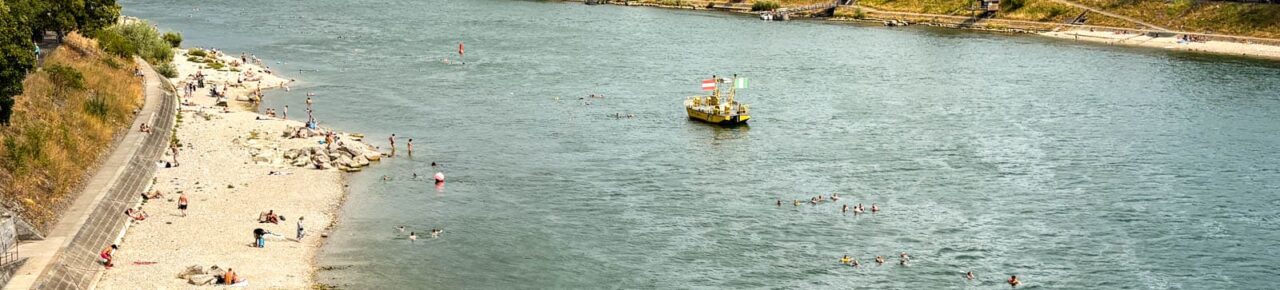
There’s one image of Basel that’s always stuck in my mind: seeing Basel locals sitting in their swimsuits, drinks in hand, deep in conversation… in a fountain downtown. Or watching them float down the Rhine, a funny fish-shaped bag tucked against them. No, you’re not dreaming: in Basel, swimming is part of everyday summer life, almost as much as morning coffee. Let me take you on a refreshing day out between the Rhine and the fountains, with my tried-and-true tips.

Summary
- My Thoughts on Swimming in Basel
- Before heading out, stop for a gourmet treat in Saint-Louis at Entrepotes
- Swimming in the Rhine in Basel: a Basel summer classic
- Where can you take a break after swimming?
- Swimming in Basel's fountains: the most unusual tradition
- What You Need to Know About Swimming in Basel
- Practical information
- How to Get to Basel from Saint-Louis
- Frequently Asked Questions About Swimming in Basel
The essentials at a glance
- 📍 Location: Basel, Switzerland, 10–15 minutes from Saint-Louis.
- ⏱️ Recommended duration: half a day, or a full day including lunch.
- 👥 Audience: strong swimmers for the Rhine, everyone for the fountains.
- 💰 Cost: Free to swim; expect to spend a few CHF on the Wickelfisch and refreshments.
My Thoughts on Swimming in Basel
I liked
- The unique summer atmosphere along the banks of the Petit-Bâle
- The Wickelfisch: as practical as it is fun to use
- The view of the old town as you drift peacefully along with the current
- Swimming in fountains—something completely out of the ordinary
I liked less
- You need to be comfortable in the water: there’s a strong current (and sometimes wind)—it’s not a swimming pool
- Stripping down in the middle of the street to get to a fountain takes a bit of nerve the first time
Before heading out, stop for a gourmet treat in Saint-Louis at Entrepotes
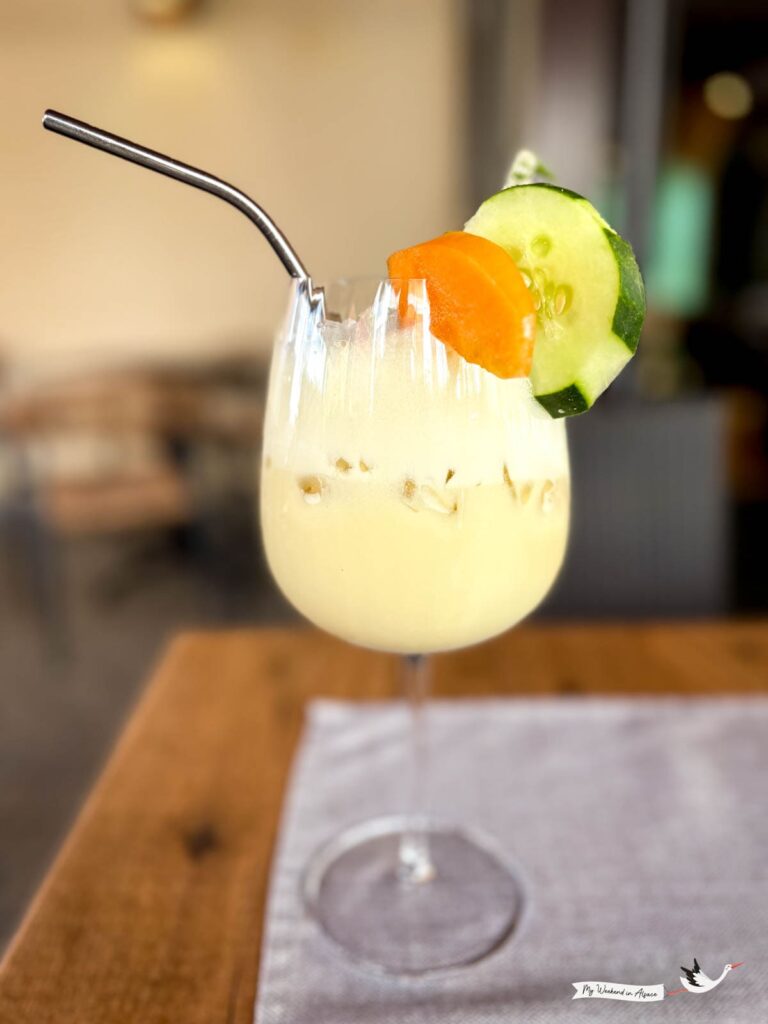
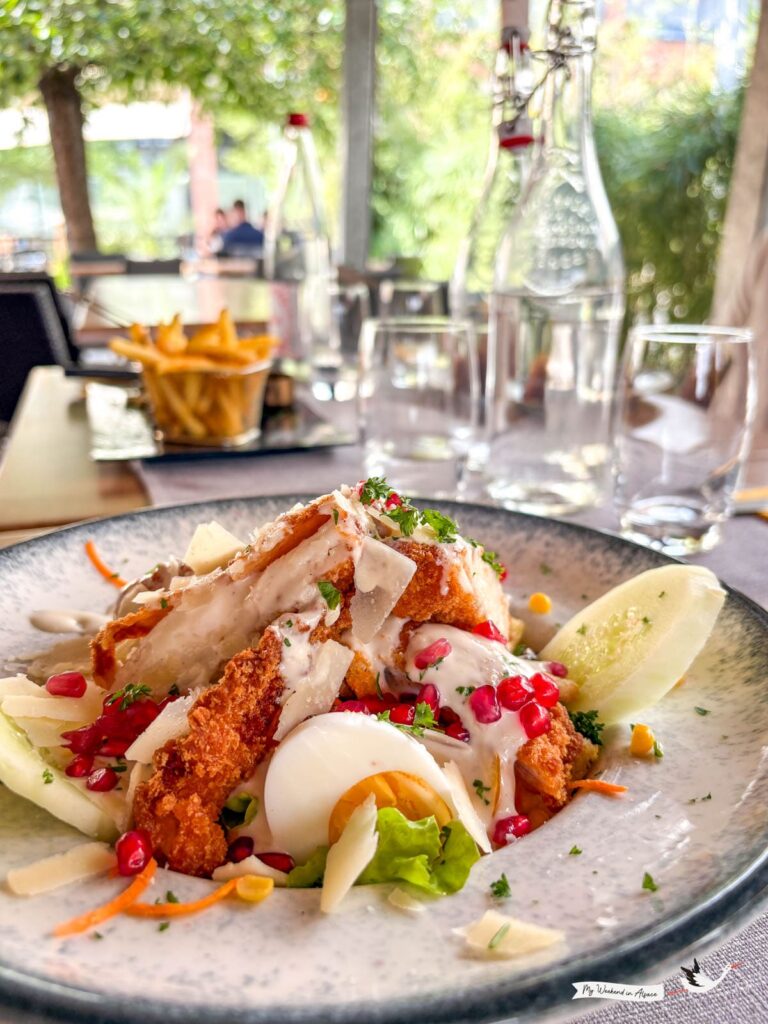
I started my day in Basel with lunch at the Entrepotes restaurant in Saint-Louis. Housed in a renovated Alsatian building, this restaurant serves refined contemporary cuisine. I enjoyed a delicious lunch there before heading to the Rhine.
🕒 Local tip: Be sure to make a reservation if you’re coming on the weekend—this spot is a favorite among Saint-Louis regulars.
Swimming in the Rhine in Basel: a Basel summer classic
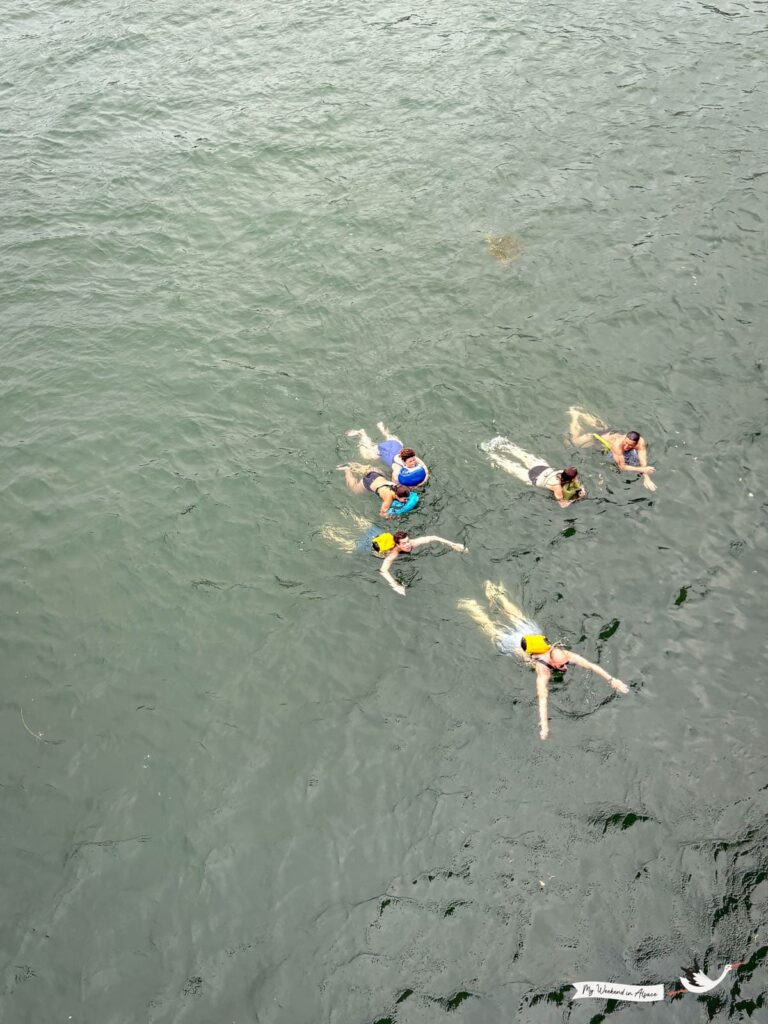
Swimming in the Rhine is THE national pastime for Basel residents in the summer. I used to love doing it back when I lived in Basel (a long time ago now!). Everywhere you look, you see locals strolling around with their Wickelfisch—that iconic, fish-shaped waterproof bag that’s become a cult classic.
The Wickelfisch, a quintessentially Basel accessory
Here’s how it works: you put your dry clothes in this waterproof bag, roll it up seven times, and get into the water with it. Even though it’s not a float, in practice, almost everyone leans on it to float comfortably—myself included!
Just keep in mind that this isn’t its primary purpose: the Wickelfisch is designed to float next to you at all times; it’s not a float you should rely on 100%. True safety comes from knowing how to swim.
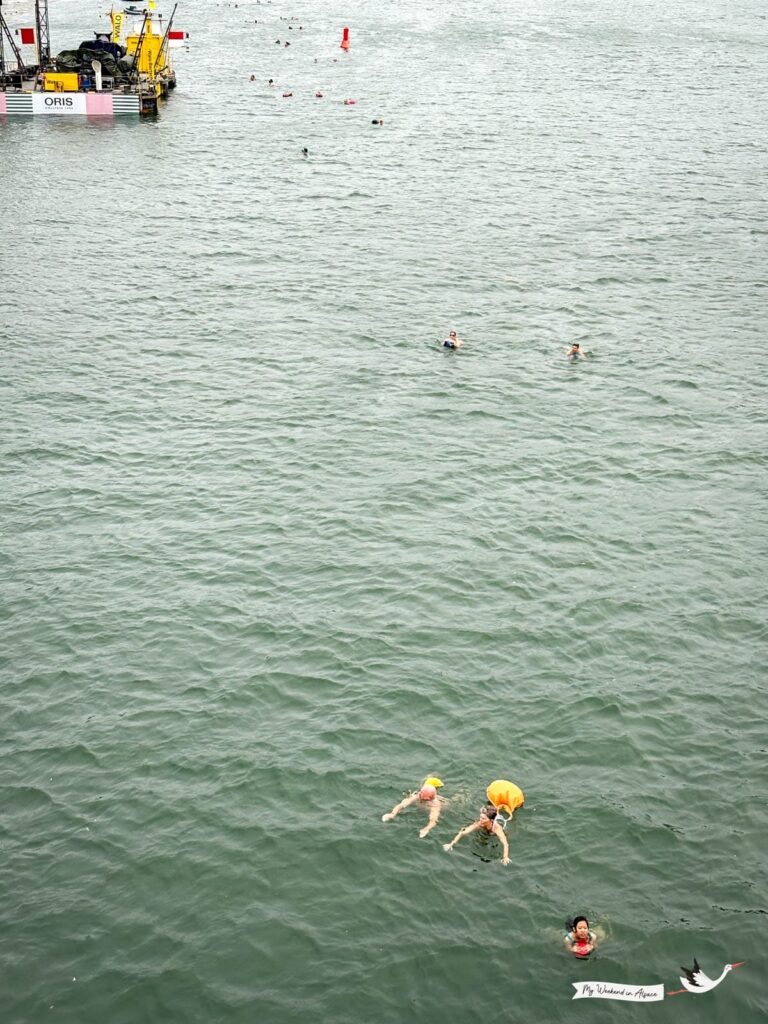
It is available atthe Basel Tourist Office (Barfüsserplatz), at newsstands on the right bank of the Rhine, or online at wickelfisch.com:
- rental for about CHF 10 per day (+ CHF 30 deposit), or
- Prices range from CHF 20 to 50, depending on size and color.
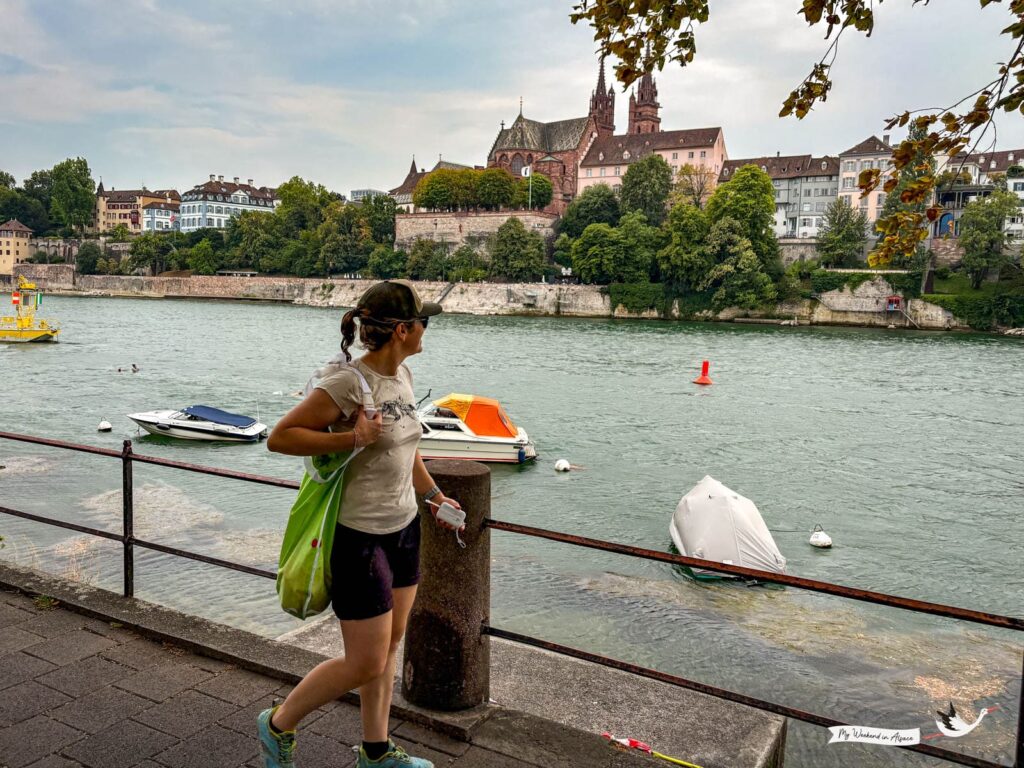
Where should you get in and out of the water?
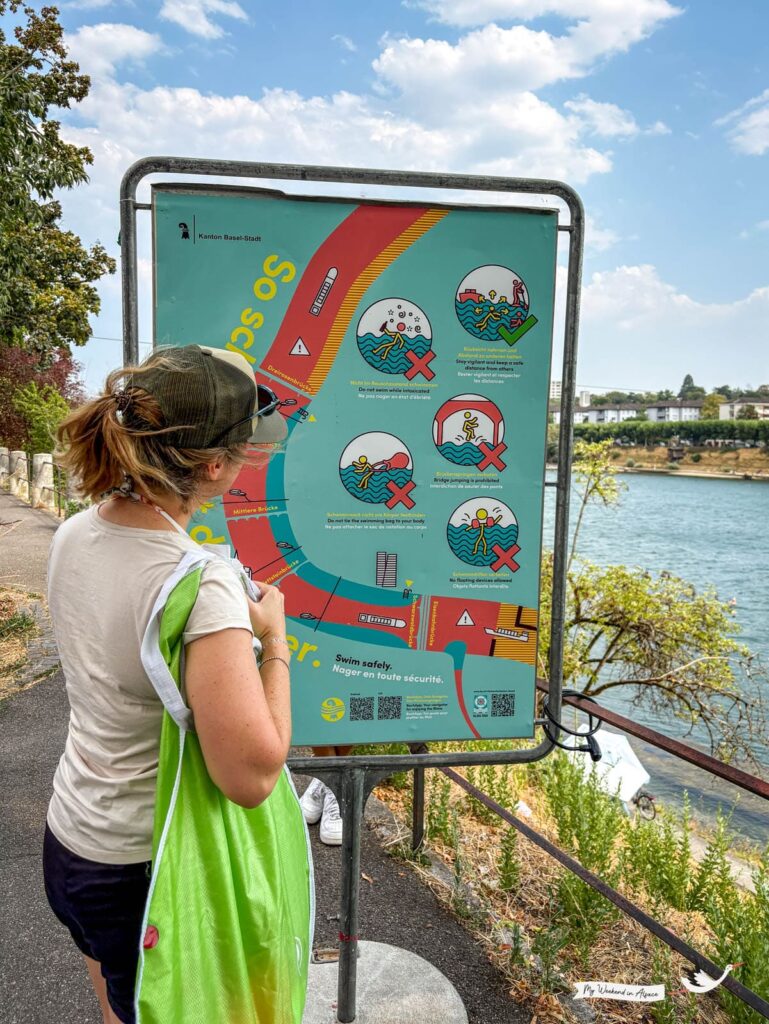
A map helps you find your way around and identify the designated swimming area. It is available here and is also posted along the Rhine.
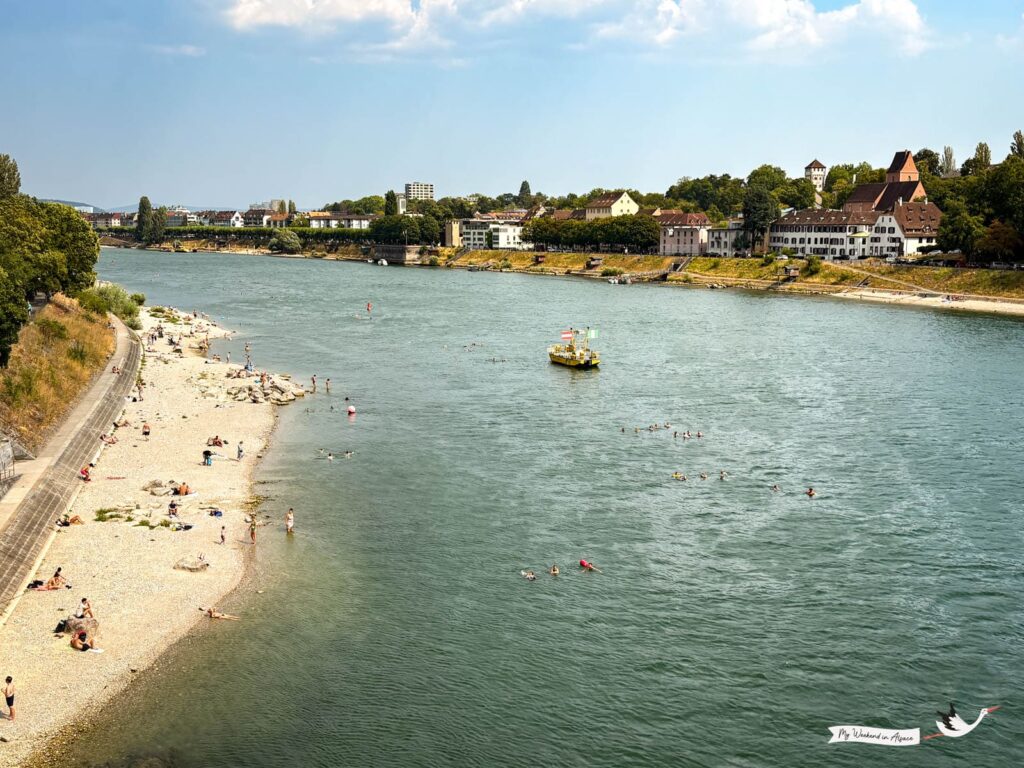
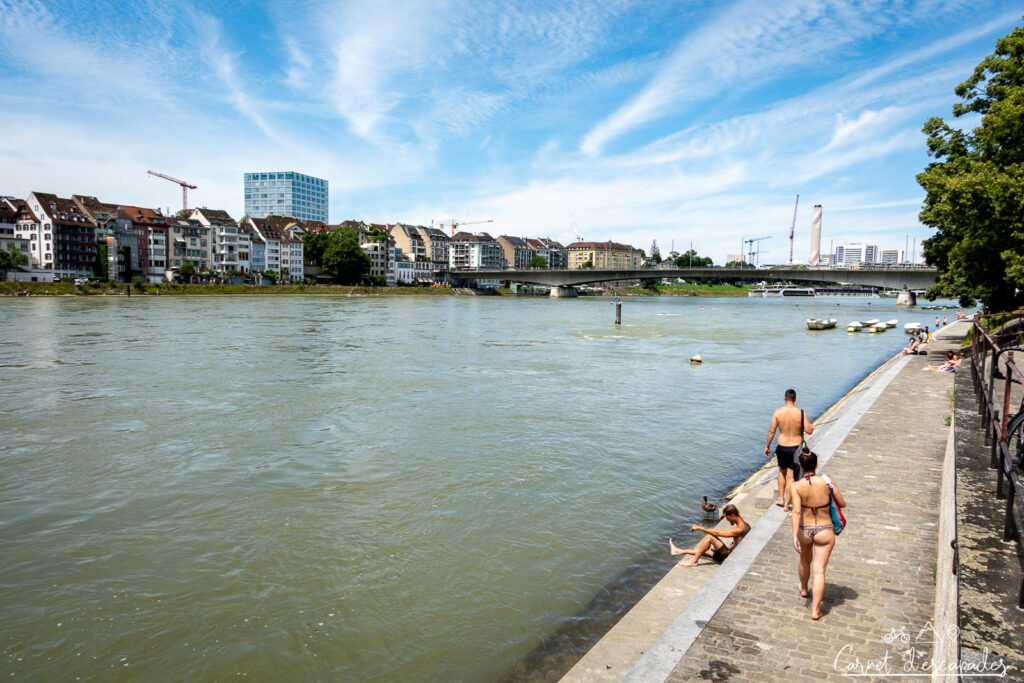
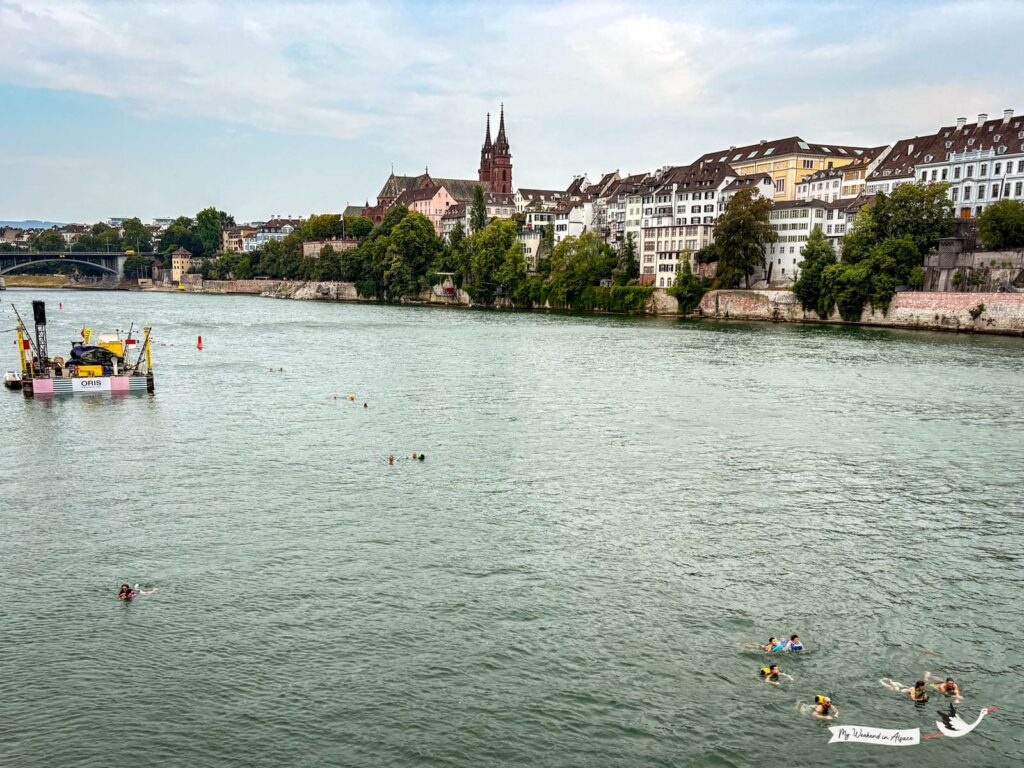
The most popular starting point is right in front of the Museum Tinguely, on the Petit-Bâle side. From there, the current carries you about 3 kilometers to the Dreirosenbrücke, the boundary of the authorized area. Allow roughly between half an hour and three-quarters of an hour for the crossing, depending on the day’s current.
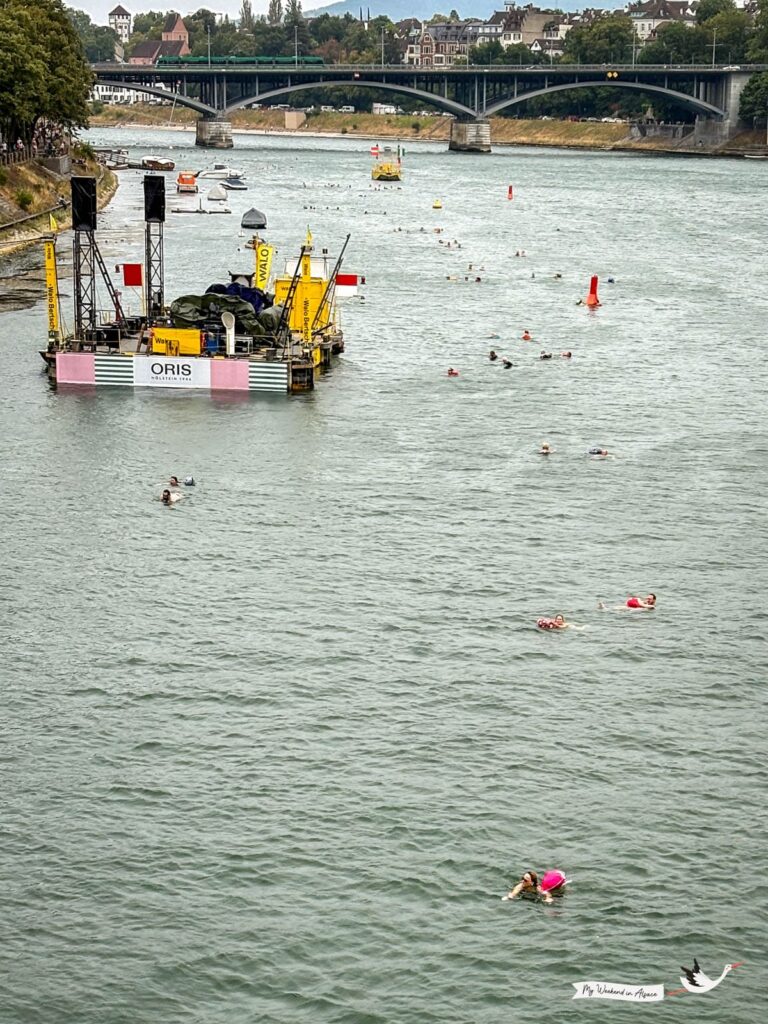
🎯 Local tip: For your first trip down the river, aim to get out somewhere between the Mittlere Brücke and the Johanniterbrücke. That’s what I did myself the very first time (it makes us feel our age—it was back in 2014!): this helps you gauge how long it takes to get back to shore with the current, so you can maintain a safe margin—especially since the swimming area ends abruptly after the Dreirosenbrücke.
Safety Rules to Follow
A few basic principles to keep in mind before taking the plunge:
- Inflatable buoys and standard floating accessories are prohibited
- Stay away from the bridge piers—that’s where the most treacherous eddies form
- Jumping off a bridge is strictly prohibited
- Stay alert to your surroundings: boats, other swimmers, ducks, rocks, bridges… It’s best to stay alert.
It’s not a swimming pool: I’m not much of a swimmer, and I’ve always been fine, but—even though it’s not dangerous—you need to know how to actively make your way back to the shore, especially on windy days when small waves can actually form.
👨👩👧 Traveling with kids? I have to admit I don’t have any experience with this, but the Basel authorities warn that the current in the Rhine poses a real risk to inexperienced swimmers and children. Rather than letting them go down the river, stick to supervised areas along the riverbank, such as the St. Johann Riverside Baths .
Where can you take a break after swimming?
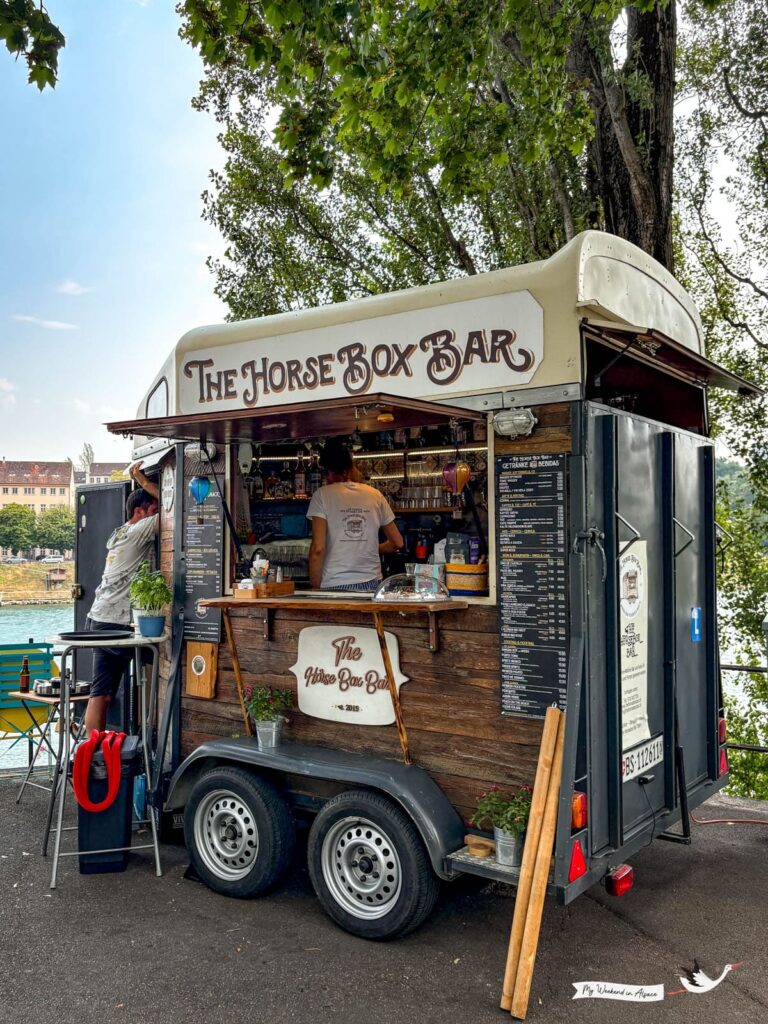
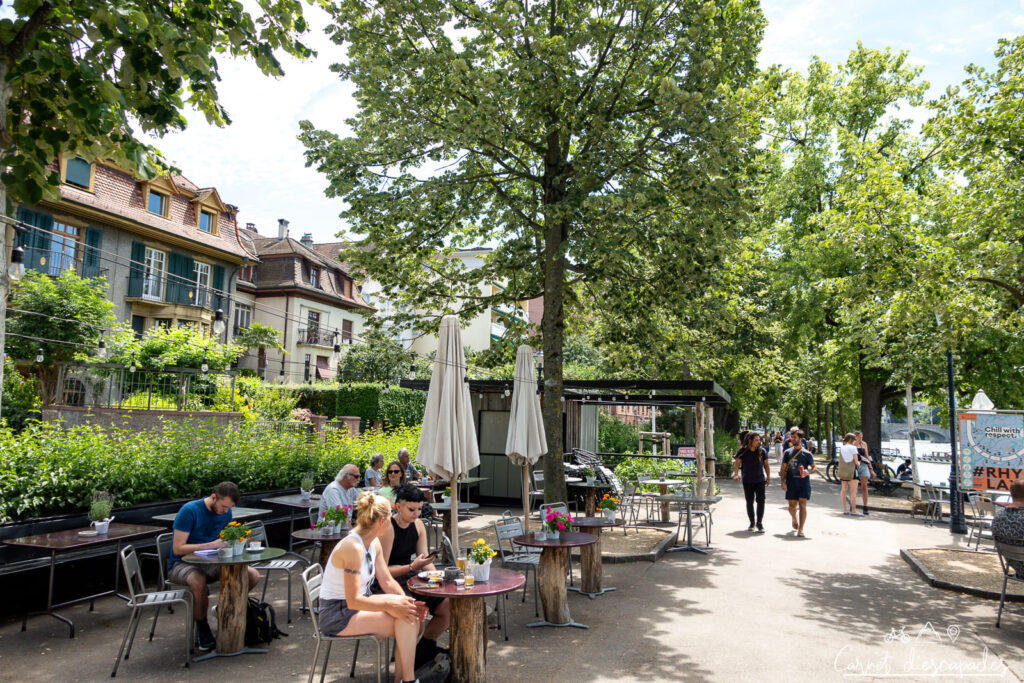
Every summer, several outdoor cafes and refreshment stands pop up along the banks of the Little Basel, offering cold drinks and artisanal ice cream. Some are quite unusual, like the one set up in a horse trailer—I love it! One important detail: many of them only accept cash, so be sure to keep some change on you before you go for a swim.
Swimming in Basel’s fountains: the most unusual tradition
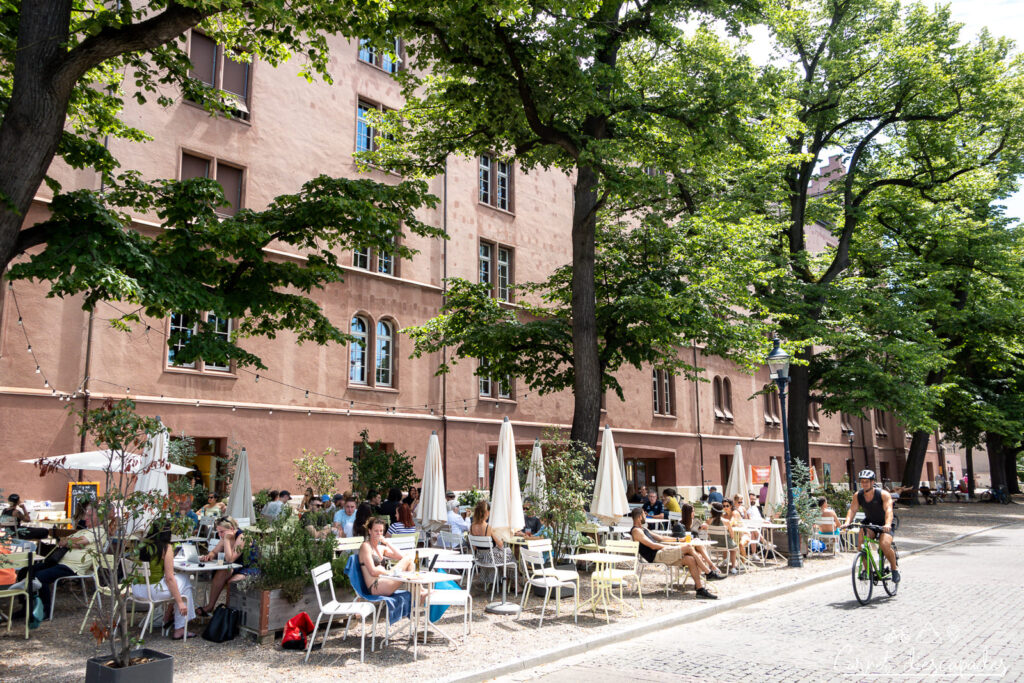
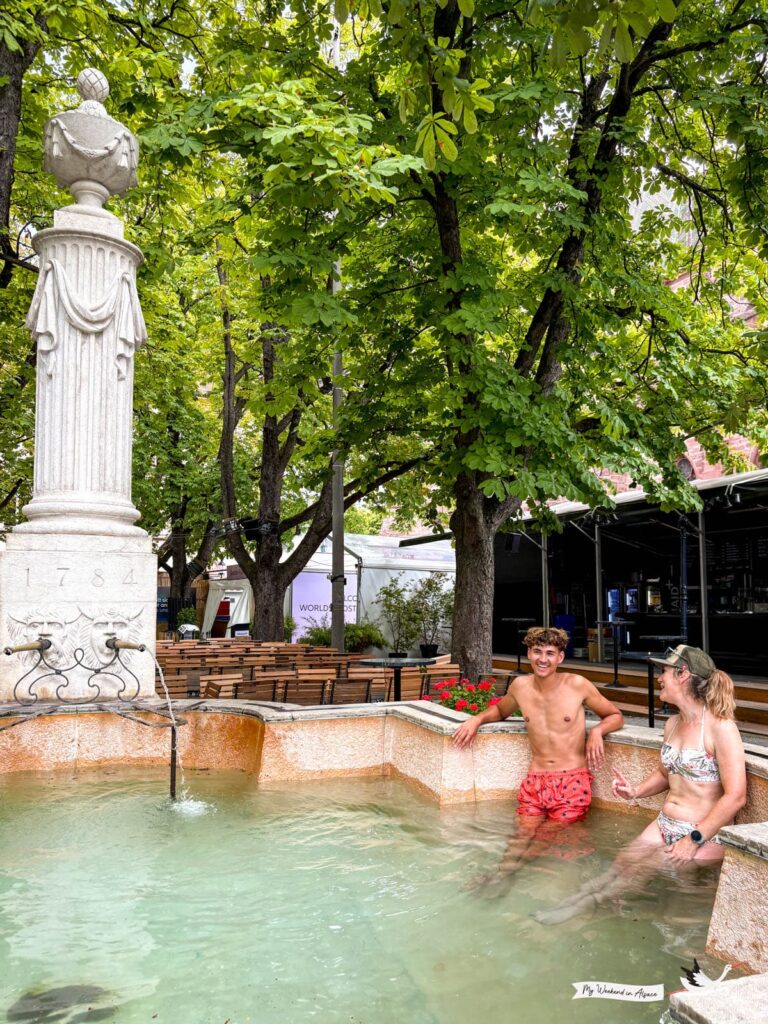
And no, this isn’t a joke: in Basel, taking a dip in a fountain right in the middle of the city is a genuine local tradition, promoted by the Tourist Office itself. The fountains are cleaned regularly to keep this custom alive, and it’s not uncommon to come across Basel residents in swimsuits, drinks in hand, relaxing right in the middle of the city.
Basel has no shortage of fountains (there are over 200!), but some are better suited for swimming than others. There are about twenty of them, which you can find directly on the tourist office’s website. As for me, it was the Pisoni Fountain, located on Münsterplatz (Cathedral Square), that really made my day!
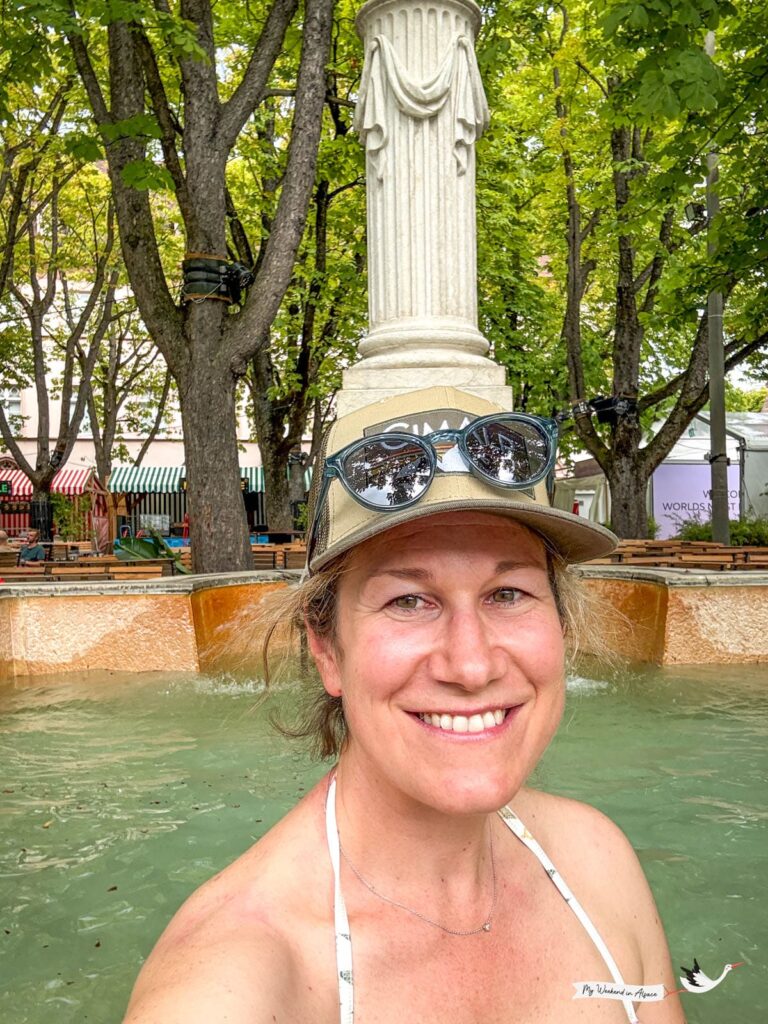
I gave it a try: Stripping down in a public square to get into a fountain seemed completely out of place to me the first time. But the cool water feels amazing, and it’s actually a lot of fun once you take the plunge!
🌙 Please note: Swimming in the fountains is prohibited after 11 p.m., out of respect for local residents.
Also on the blog
What You Need to Know About Swimming in Basel
- The Rhine flows downstream from the Museum Tinguely to the Dreirosenbrücke, a distance of about 3 km, in 30 to 45 minutes
- The Wickelfisch protects your belongings and can serve as a float in a pinch, though it can never replace good swimming skills
- Basel’s fountains offer a 100% unique alternative that’s free and accessible to everyone
- From Saint-Louis, you can get around without a car: the train, bus, or bike are more than enough
Want to keep the fun in the water going without crossing the border? Head to Parc des Eaux Vives in Huningue, right near Saint-Louis.
Practical information
- 📍 Official swimming area on the Rhine: from the Tinguely Museum to the Dreirosenbrücke, on the Kleinbasel side
- 🎒 Wickelfisch: Rent or buy at the Tourist Office (Barfüsserplatz) or online at wickelfisch.com [prices to be confirmed before publication]
- 🌡️ Water temperature: between 20 and 24°C during peak season; the current is stronger in June and then subsides
- 🚿 Rheinbad Breite and St. Johann Bathing Cabins: Open from May through September, weather permitting; showers and changing rooms available for a fee
- 📱 BachApp (iOS/Android): water temperature, river level, access map
- 🚻 Public restrooms and drinking water stations scattered along both banks
- 🌙 Fountains: Swimming is permitted, but prohibited after 11 p.m.
- 🎉 Every year in mid-August, the Rheinschwimmen brings together several thousand Basel residents for a group swim down the Rhine—check the dates for that year
How to Get to Basel from Saint-Louis
You don’t need a car for this getaway: the combination of train, bus, and bike is more than enough!
- 🚌 Bus: Distribus lines 603 and 604, Basel Schifflände stop, on the banks of the Rhine. Allow about 15–20 minutes.
- 🚆 Train: Easy connection to Basel SBB (Basel CFF).
- 🚋 Tram: Line 3, to Barfüsserplatz (Tourist Information Office, for the Wickelfisch)
- 🚲 Bicycle: It takes 10 to 15 minutes from Saint-Louis via the cross-border bike paths
Frequently Asked Questions About Swimming in Basel
Where can you swim in the Rhine in Basel?
The easiest access point is at the foot of the Museum Tinguely, on the Petit-Bâle side. The current then carries you to the Dreirosenbrücke, where the designated swimming area ends.
Is it dangerous to swim in the Rhine in Basel?
It’s not dangerous if you’re comfortable in the water and follow the basic guidelines: be a competent swimmer, avoid bridge piers, never dive off a bridge, and stay alert.
Can you take your children swimming in the Rhine in Basel?
It’s possible, but caution is advised: the Basel authorities themselves warn that the current in the Rhine poses a particular risk to children and inexperienced swimmers. Rather than letting them drift with the current, it’s better to choose a supervised area along the riverbank, such as the Rheinbad St. Johann.
How much does a Wickelfisch cost?
Expect to pay about CHF 10 per day for rental (plus a deposit), or between CHF 20 and 50 to purchase one, depending on the size, at the Basel Tourist Office or online.
Can you really swim in Basel’s fountains?
Yes, it’s a well-known local tradition, as long as you keep the area clean and respect the ban on swimming after 11 p.m.
How long does it take to get from Saint-Louis to Basel?
It takes about 15 to 20 minutes by bus or a few minutes by direct train to get to downtown, or 10 to 15 minutes by bike.
This article was written as part of a paid collaboration with the Saint-Louis 3 Pays Tourism Promotion Agency. I retained complete editorial independence.