



Visit Strasbourg’s Neustadt, the German imperial quarter
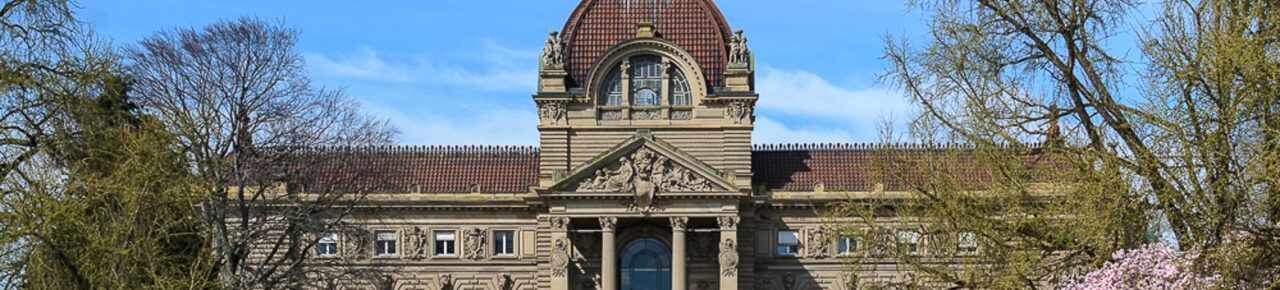
Have you explored the Grande Île and Petite France in the southwest of Strasbourg? Then let’s head to the northeast of the city: I’ll take you to discover the Neustadt neighborhood, also known as the German Quarter. Although less popular than the Old Town, with its imposing monuments and wide avenues, it nonetheless represents an important chapter in the city’s 19th-century history.

Summary
- What is Strasbourg's Neustadt?
- My Thoughts on Strasbourg's Neustadt
- Discover Strasbourg's Neustadt district - My map
- The Neustadt's landmark buildings
- A Short Art Nouveau Tour of the Neustadt
- Neustadt for Food Lovers: Where to Eat and Take a Break
- Directions and Practical Information
- Key Facts About Strasbourg's Neustadt
- Frequently Asked Questions About Strasbourg's Neustadt
The essentials at a glance
- 📍 Location: A neighborhood in the northern part of Grande Île, designated a UNESCO World Heritage Site since 2017
- 🏛️ Style: Art Nouveau, Neo-Gothic, Neo-Renaissance — architectural heritage from 1871 to 1918
- ⏱️ Recommended duration: Half a day to stroll around and explore the main sights
- 👥 Audience: Lovers of heritage, architecture, and leisurely walks
- ⭐ Must-Sees: Place de la République, Palais Universitaire, Bains Municipaux
What is Strasbourg’s Neustadt?
Neustadt, from the German for “new town,” refers tothe urban expansion of Strasbourg following the annexation of Alsace-Moselle by the German Empire in 1871. Strasbourg was chosen as the capital of the new Reichsland and had to rise to the challenge of its new responsibilities.
Strasbourg’s Neustadt was a showcase of Emperor William I’s power. The construction policy would transform Strasbourg, which until then had been confined to its historic center and its “false rampart,” the Ill River. Architect Jean Conrath won the competition to design the urban expansion. Whether serving as housing or offices for the new administration, prestigious buildings would spring up, and Strasbourg’s population would double thanks to this new city.
Located in the north of the Big Island, the German Imperial Quarter has been added to the UNESCO World Heritage List in 2017. With its Art Nouveau, Neo-Gothic, and Neo-Renaissance buildings and its iconic landmarks, the Neustadt offers a comprehensive overview of the period from 1871 to 1918 and the city’s German heritage.
My Thoughts on Strasbourg’s Neustadt
I liked
- The University Palace, a bright inner courtyard—a real favorite of mine
- The Municipal Baths, a beautifully renovated Art Nouveau gem
- A neighborhood that’s much quieter than the historic center—perfect for taking a breather
I liked less
- Some iconic buildings (ministries, prefecture) are not open to the public, except during European Heritage Days
Discover Strasbourg’s Neustadt district – My map
To truly appreciate Neustadt, you have to take the time to look around and look up. On doors, porches, pediments, and facades, beautiful details are everywhere: moldings, reliefs, volutes, and ornamental stained-glass windows; busts or royal bestiary figures; columns topped with capitals; and statues perched atop Wilhelmine-era buildings.
With all these opulent buildings, it almost feels like you’re on the boulevards of Paris, and the Haussmannian influence is palpable. Aside from Place de la République, it’s primarily a residential neighborhood. Significantly less crowded than the historic center, strolling through the Neustadt also gives you a chance to catch your breath. Note that while some administrative buildings aren’t open to visitors, they do open their doors to the public during European Heritage Days.


I’ve put together several itineraries to help you discover it:
- a heritage trail with important buildings
- Architectural gems you won’t want to miss on a tour of Art Nouveau architecture
- and finally, a gourmet stroll.
The Neustadt’s landmark buildings
Place de la République
To discover the Neustadt, the easiest place to start is Republic Square (Kaiserplatz), with its central garden and its many important official buildings. Whether in spring, when the magnolias are in bloom, or when the gingko bilobas put on their autumn finery, the light is always incredible.

Walking around the square, you can see, in turn, the imposing Palais du Rhin (formerly the Imperial Palace, now the headquarters of the DRAC), the former ministries—two similar buildings now occupied by the Prefecture and the Regional Directorate of Public Finance— the National University Library (BNU), and finally the former Landtag Palace (the Legislative Assembly), to which an extension was added at the rear to house the Strasbourg National Theater (TNS).
I recommend popping into the National and University Library (BNU) to admire the grand staircase and the glass roof. Even though access to the upper floors is reserved for students, it’s worth a look!


The Imperial Axis, from Place de la République to the university district
The imperial axis corresponds toAvenue de la Liberté (formerly Kaiserstrasse), which connects the Palais du Rhin on Place de la République to the university district and the Palais Universitaire at the far end. As you stroll along the avenue, you’ll come across other notable buildings: the Villa Greiner, which now houses the Tomi Ungerer Museum, andthe Hôtel des Postes, which has been renovated into a chic brasserie and upscale residential complex. A little further on is the Germania—now better known as Gallia—a university residence and restaurant. And from the Pont Royal, you’ll catch a glimpse of the two spires ofSt. Paul’s Church. Finally, don’t miss the chance to take a look at the superb (and surprising) Lycée des Pontonniers nearby!

The University District and the University Palace
The University Palace, located at the far end of the Imperial Axis, is a real favorite of mine. This building is truly magnificent. Surrounded by two-story galleries, the covered courtyard is bathed in light streaming through the immense glass roof. With its Corinthian columns, purple drapes and walls, and floor mosaics, the atmosphere is studious, respectful, yet warm.


What a theatrical setting (and what a treat for the students in Strasbourg)—it almost makes you want to go back to school. It’s primarily a study building (open Monday through Friday from 8:30 a.m. to 11:45 a.m. and from 1:00 p.m. to 4:30 p.m. during the academic year), but you can sneak in and take a tour of the gallery (via the magnificent marble staircase).
What makes this place a little unique? Hidden in the basement is the Adolf Michaelis Museum, which houses a collection of casts of ancient statues. ⚠️ The museum is currently closed temporarily while renovations are underway to improve the visitor experience; no reopening date has been announced yet—be sure to check its status before making a special trip to visit it. Admission is usually free, and the museum is open Mondays, Wednesdays, and Fridays from 2:00 p.m. to 6:00 p.m. And don’t forget to say hello to Goethe as you pass by—he’s keeping an eye on things outside!


Strasbourg Municipal Baths
Another favorite of mine is the Strasbourg Municipal Baths. With its period wooden changing rooms, stained-glass windows, blue ceramics, and marble, this former municipal swimming pool (designated a historic monument), built in 1908, is magnificent—a little gem in the heart of the Neustadt. Recently renovated, it is now a place dedicated to health, sports, and wellness. The historic pools—which can be admired from the changing rooms upstairs—and the Roman baths have been complemented by a sauna, a jacuzzi, a spa area with an outdoor pool, and a fitness center.
It goes without saying, but you can’t take an Art Nouveau bath the way you visit a museum. You’ll have to come specifically to enjoy the aquatic area. But since we’re going to be splashing around anyway, let’s do it in style—it’s a great excuse to relax.


University of Strasbourg Botanical Garden
I have a great passion for botanical gardens, and tropical greenhouses in particular. The warmth, the vegetation—I could spend hours wandering through these little urban jungles. The Botanical Garden is located behind the university campus. Founded in 1619, the botanical garden is home to nearly 6,000 plant species—including 450 exotic species in the greenhouse—spread across 3.5 hectares. It’s especially pleasant in the summer when the vegetation is lush. A little oasis of tranquility and coolness—perfect for strolling, taking a break, or reading a book by the central pond… One of my favorite parks in Strasbourg!

A Short Art Nouveau Tour of the Neustadt
Toward the end of the 19th century, a new artistic movement emerged and gained prominence in the fine arts and architecture in particular:Art Nouveau (Jugendstil in German).
How can you recognize the Art Nouveau style?
This can be seen in the materials used—reinforced concrete, wrought iron, stained glass, and ceramics —that adorn the facades of buildings. But it is also evident in the curves, arabesques, and plant motifs that find their way into the architecture.


What are the most beautiful Art Nouveau apartment buildings in Strasbourg?
Strasbourg has a few fine examples of this type, such as on Rue Sellenick or onthe Allée de la Robertsau, a prestigious thoroughfare in the Neustadt. Unusual, unconventional, yet always very attractive—here are a few that, in my opinion, really stand out from the crowd:
- As you walk down Rue du Général Rapp, a colorful facade suddenly appears at number 10, depicting papyrus plants, lotus flowers, birds, and pharaohs. With its doorway framed by two columns that rise all the way to the top, the Maison Égyptienne is a striking sight. Built in 1905, this building is the work of painter Adolf Zilly and architect Franz Scheyder.
- With its colorful tiles depicting fleurs-de-lis, inlaid climbing roses, and ginkgo leaves, the Egyptian-style building at 56 Allée de la Roberstau is surely one of the prettiest and most ornate.
- This original house has the air of a Casa Barcelona. At 20 rue Sleidan, Villa Brion is recognizable by its light-colored facade, butterfly gate and blue metal railings.
- Finally, even though it’s not in the heart of the Neustadt but in the Krutenau district, don’t miss the magnificent Art Nouveau façade of the Hear (Rhine University of the Arts), made of brick and ceramics.

Neustadt for Food Lovers: Where to Eat and Take a Break
After strolling through the streets and beautiful avenues of Neustadt, there’s nothing better than a quick culinary break. The neighborhood has a few great spots:
- It’s small but has a tea lounge, and Pâtisserie GC has the advantage of being off the beaten path, so it’s less crowded. The pastries are very elegant and, of course, delicious—tested and approved by this sweet tooth of mine.
- Before dessert, you can start with Niko Niko, a great Japanese restaurant located right across the street on Avenue des Vosges.
- Nearby is Les Innocents. You’ll need to get there early to get a table—the place is often fully booked. The restaurant serves very creative bistro cuisine, so if you manage to snag a table, go there without hesitation.
- The Cafoutche offers a lovely seasonal menu—from appetizers to dessert, everything is delicious and beautifully prepared. The bar-restaurant is located in the TNS building. In the summer, you can enjoy lunch or have an aperitif on the large terrace. Stop by after visiting the Tomi Ungerer Museum.
- Near the university, you’ll find a Michelin-starred restaurant called Les Funambules.

Directions and Practical Information
How to Get to Neustadt
- Tram: République stop
- On foot: about 10 minutes from Strasbourg Cathedral
Key Facts About Strasbourg’s Neustadt
- Neustadt is Strasbourg’s German imperial quarter, which has been a UNESCO World Heritage Site since 2017
- Take a moment to look up: Art Nouveau details are hidden on the facades, porches, and pediments
- Place de la République and the Palais Universitaire are must-see attractions you won’t want to miss
- Several buildings (BNU, Palais Universitaire) are only partially open to the public outside of Heritage Days
Want to keep exploring Strasbourg? Check out my Top 25 Things to Do in Strasbourg or my guide to Petite France.
Frequently Asked Questions About Strasbourg’s Neustadt
What is Strasbourg’s Neustadt?
Neustadt, which means “new town” in German, refers to the urban expansion built after Alsace was annexed by the German Empire in 1871. This imperial district, located north of the Grande Île, has been a UNESCO World Heritage Site since 2017.
Can we tour the interior of the buildings in Neustadt?
Some places are open to the public, such as the lobby of the BNU or the gallery at the Palais Universitaire on weekdays, but most administrative buildings (ministries, prefecture) are not open to visitors, except during European Heritage Days.
Is the Adolf Michaelis Museum open to the public?
As of this writing, the museum is temporarily closed for renovations, with no reopening date announced—it’s best to check before making a special trip there.
How much time should I set aside to visit Neustadt?
Plan on spending half a day strolling along the main avenues and admiring the architecture—a little longer if you’d like to visit the Municipal Baths or the Botanical Garden.
What is the architectural style of Neustadt?
The neighborhood blends Art Nouveau, Neo-Gothic, and Neo-Renaissance styles, with a visible Haussmannian influence evident in the wide avenues and opulent buildings.